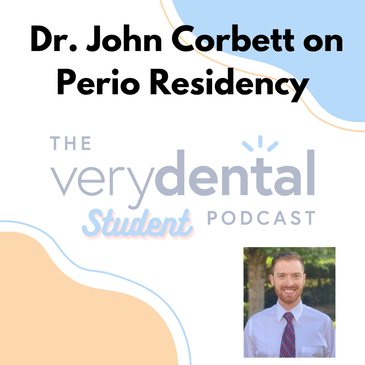
Mo is joined by his friend Dr. John Corbett. John just finished a perio residency at Oklahoma and is heading to the Air Force!
John explains how perio residency works: applying, matching, finishing and everything in between!
Some links from the show:
- OU Graduate Perio program
- John's email: jcorb89@gmail.com
Join the Very Dental Facebook group using the password "Timmerman," Hornbrook" or "McWethy," "Papa Randy" or "Lipscomb!"
The Very Dental Podcast network is and will remain free to download. If you'd like to support the shows you love at Very Dental then show a little love to the people that support us!
--
Crazy Dental has everything you need from cotton rolls to equipment and everything in between and the best prices you'll find anywhere! If you head over to verydentalpodcast.com/crazy and use coupon code "VERYDENTAL10" you'll get another 10% off your order! Go save yourself some money and support the show all at the same time!
--
The Wonderist Agency is basically a one stop shop for marketing your practice and your brand. From logo redesign to a full service marketing plan, the folks at Wonderist have you covered! Go check them out at verydentalpodcast.com/wonderist!
--
Enova Illumination makes the very best in loupes and headlights, including their new ergonomic angled prism loupes! They also distribute loupe mounted cameras and even the amazing line of Zumax microscopes! If you want to help out the podcast while upping your magnification and headlight game, you need to head over to verydentalpodcast.com/enova to see their whole line of products!
--
CAD-Ray offers the best service on a wide variety of digital scanners, printers, mills and even their very own browser based design software, Clinux! CAD-Ray has been a huge supporter of the Very Dental Podcast Network and I can tell you that you'll get no better service on everything digital dentistry than the folks from CAD-Ray. Go check them out at verydentalpodcast.com/CADRay!
[00:00:01] This is a production of The Very Dental Podcast Network
[00:00:09] It's time for a very dental podcast just for students and new dentists
[00:00:14] Welcome to The Very Dental Student Podcast and now here's your host Mohamed Aboubasha
[00:00:20] Hello everybody. Welcome to another episode of The Very Dental Student Podcast. I'm your host Mohamed Aboubasha
[00:00:26] Today, I have a good friend on Dr. John Corbett
[00:00:30] John how are you doing today? Doing very good. How about yourself? I'm doing amazing
[00:00:34] I'm really excited to get into this topic that we have planned for you all today. So just some background story
[00:00:41] Dr. Corbett is
[00:00:43] Well was just finished up his perio residency
[00:00:47] at OU so I've gotten the pleasure and the great opportunity to
[00:00:55] assist him on a few cases up in grad perio and
[00:00:59] It's been I've definitely learned a lot just being up there watching him work
[00:01:03] So dr. Corbett, I want you to give us just a little bit of some background on you
[00:01:09] Just like why you got into dentistry or how you got into dentistry and and so on
[00:01:15] Well first thing thanks for having me on
[00:01:18] Second thing I love the past tense as in was a resident. Oh, that's never felt sweeter to me
[00:01:24] So I graduated from the OU College of Dentistry in 2021
[00:01:28] Was immediately accepted into the University of Oklahoma
[00:01:33] Graduate periodontics program. I went one for one in the match program and now here I am and I'm getting ready to transition
[00:01:39] Into the Air Force as a periodontist in the near future
[00:01:44] Awesome, yeah, so
[00:01:46] Did you always know that you were going to do perio residency?
[00:01:50] You know, I didn't no I just like I think most of your listeners probably do I shadowed as many specialties as I could
[00:01:59] I did notice that the periodontist I I shadowed I tended to like that more than the others
[00:02:07] But I really kept an open mind I fully planned on being a general dentist until I'd say Oh
[00:02:14] Halfway, maybe towards the end of second year of dental school
[00:02:17] Where I just felt geez this perio lectures are pretty cool it all seems to make sense to me
[00:02:23] I
[00:02:24] Enjoyed doing it in clinic and I also had a great relationship with one of the professors down in the graduate periodontics department
[00:02:31] and
[00:02:32] You know in talking with him
[00:02:34] I got to kind of get a sense of what the lifestyle is of a periodontist and it sold me
[00:02:39] That's what I wanted to do
[00:02:42] Awesome. Yeah, so you
[00:02:45] You mentioned like the lifestyle of the parrot what exactly
[00:02:48] Drew you to perio like I just maybe unpack that a little bit more for the listeners. Sure
[00:02:55] Well as you got to see firsthand, it's pretty exciting stuff that we do and it's every procedure is something I would consider to be
[00:03:02] exciting
[00:03:04] The procedures are really neat and innovative they're very very scientifically backed
[00:03:09] most of
[00:03:11] periodontics is in the residency is
[00:03:13] Heavy literature basis that we learn the ifs whys and you know how to with all of our procedures
[00:03:22] not to mention
[00:03:24] We tend to deal
[00:03:27] with
[00:03:28] patients that have more severe issues
[00:03:32] So really we have a in my opinion a greater effect in terms of taking somebody from a pretty
[00:03:38] Desperate situation to a much better situation with usually good results at the end of it
[00:03:44] Yeah for sure. Yeah, I definitely have noticed that you know the procedures that you guys do are
[00:03:52] Definitely exciting definitely kid. I don't know keeps you on your keeps you on your feet for sure
[00:03:58] Yeah, I mean I've assisted dr. Corbett on just a few things
[00:04:03] We've done like we did like a side lateral sinus lift I assisted him on like a tunneling procedure
[00:04:10] Free gingival graft. So yeah, they do a lot of really fun stuff in there for sure
[00:04:16] Did you ever feel like you would miss?
[00:04:19] The general dentistry procedures whenever you decided to specialize, you know, it's funny because I
[00:04:26] Distinctly remember the last filling I did in dental school. It was on number 12
[00:04:30] It was a do and I got done with it and I kind of had this
[00:04:35] Moment of like wow. Okay, that's the last time I'm ever gonna do that
[00:04:38] and then
[00:04:40] Weirdly enough you never really leave general dentistry even as a specialist the foundational aspects of general dentistry are with you constantly
[00:04:49] From a basis of you know, a general dentist will ask me. Hey is this tooth restorable?
[00:04:53] Are the carries too far advanced or can we save this tooth?
[00:04:57] well
[00:04:59] More often than not we tend to help our general dance friends in terms of you know, setting the margins for crowns
[00:05:06] finalizing crown preps
[00:05:10] If that's what the referral dentist wants to do my greater point is we still very much so
[00:05:17] take some of the
[00:05:19] Capabilities of a general dentist with us into specialty. We never really stopped being dentists
[00:05:27] Yeah, that definitely makes a lot of sense. I feel like
[00:05:31] You know perio and and prost are like the two specialties that are the most
[00:05:37] like intertwined with general dentistry like it's like
[00:05:42] you can't you can't be a general dentist without having some understanding of both of those and then you also
[00:05:49] Can't be in either of those specialties without having a greater outlook on the you know, the overall restorative needs of the patient
[00:05:56] Do you think that's fair to say I would I would call both cross and perio a general dance best friend
[00:06:03] we have a tendency to really help either get general dance out of tough sticky situations or
[00:06:11] Prevent them from even getting going in the first place
[00:06:14] a pretty common thing with members of my class I graduated with in 2021 is
[00:06:20] You know routine calls texts what have you saying? Hey, what do you think about this?
[00:06:25] And usually at first it's the hey I just did something I don't know how I'm gonna be able to bail myself out of this
[00:06:32] What can I do or as they get more experience? They're like, hey, I'm looking at this situation
[00:06:38] It looks like something I got in trouble with before
[00:06:41] What would you advise before I do anything?
[00:06:44] Both perio and cross both, you know, we can't wait to help our general dentist friends out
[00:06:50] To prevent those situations from having in the first place
[00:06:53] Awesome. Yeah, so
[00:06:56] Let's talk a little bit about perio residency specifically. So I know you stayed at the same University for dental school and perio
[00:07:05] but
[00:07:06] What was the application process like like how many programs did you apply to?
[00:07:11] Is it like a match system? How does it all work?
[00:07:14] Yeah, so first starting it is a match system
[00:07:18] There are some programs that are non match
[00:07:21] Those are generally looked down upon by the other residencies in the country
[00:07:25] I chose to not apply to any non match programs
[00:07:31] So, yeah and just a brief summary of how match works
[00:07:34] I let's say I applied at five schools get five interviews
[00:07:37] I will rank all five of those programs that if I want to go to them
[00:07:42] And then the other the schools will rank me against all the other applicants
[00:07:46] There's an algorithm that nobody really has the full understanding of what it does is this somewhat confidential
[00:07:52] And then what happens on match day is you get a result and for me
[00:07:57] It was you are going to the University of Oklahoma and for Oklahoma. They said you are getting John Corbett
[00:08:04] Now you can always decline that but
[00:08:08] Last I checked the rule was if you decline a match opportunity, then you're going to get a match
[00:08:15] Opportunity then you cannot reapply for something like three years afterwards, so
[00:08:20] You are strongly encouraged to only rank schools that you have the desire to go to if you don't want to go there
[00:08:27] Do not put them on because God forbid you actually get matched them. Well, you're gonna go
[00:08:32] In terms of my experience, so I came about in a very difficult time worldwide
[00:08:38] I was in the middle of pandemic when I was applying
[00:08:41] So we didn't have the opportunities that like your listeners would now to go do externships
[00:08:49] You know just go visit the programs
[00:08:50] I didn't really get the opportunity to do that
[00:08:52] The only one I did get a chance to do that with was the United States Air Force residency down in San Antonio
[00:09:00] So ideally I would have done more of that but
[00:09:03] So I ended up applying I think let's say about six to eight
[00:09:06] Residencies total my basis for choosing them was mainly cost
[00:09:12] I have an own personal belief that you should not go to dental school and residency and then saddle yourself with
[00:09:19] hundreds of thousands of dollars worth of debt needlessly
[00:09:22] More often than not. I think you'll find that people regret that in the long run if they weigh overspend for their dental education
[00:09:30] So on the basis of that I went through I looked at all the websites
[00:09:33] Got a basic understanding what tuition costs would be
[00:09:37] Obviously, Oklahoma was my in-state school. So it was far and away the cheapest
[00:09:42] So that was yeah, that was about it. It was a fun time
[00:09:45] I always say the application process is far and away the most stressful time of residency
[00:09:51] Yeah, would you say that?
[00:09:54] The specialty or the residency application was like
[00:09:59] more
[00:10:00] like difficult and
[00:10:03] Stressful than dental school applications was
[00:10:06] That's a good question. It's I think the comparisons there. I wouldn't say one is significantly more difficult than the other
[00:10:15] The only thing might be that you know when you're going to dental school
[00:10:20] You're going for one out of 100 spots, right? So you have a greater odds
[00:10:25] Assuming you're a good candidate for dental school
[00:10:27] You have a greater odds
[00:10:29] Assuming you're a good qualified applicant to get in. Well in residency like for example University of Oklahoma
[00:10:34] It's one of two spots that you're going for and they might well
[00:10:39] I know that they have something like, you know, 60 80 100 applicants for those two spots every single year
[00:10:45] now, of course, it's widely varying in terms of what the
[00:10:49] profiles are of those people they're applying but the overall competition for those limited spots is
[00:10:56] Harder that being said the actual application process I'd say it's pretty similar, you know, you're gonna have your personal statement
[00:11:03] You're gonna have your letters recommendation. You have your CV
[00:11:06] and then you're always gonna have secondaries at each one of the programs you apply to but
[00:11:12] Organizationally, I'd say it's pretty comparable in terms of degree of difficulty of actually getting in I would say it is greater than dental school
[00:11:20] Yeah, I
[00:11:21] Just to give I don't know I mean like I know you don't have like all the data on every Perry a resident but
[00:11:30] Just for the listeners to have like a little bit of an idea. Like what is a good?
[00:11:35] GPA
[00:11:36] To think like, okay, I can even think about this because I know there's like I mean
[00:11:42] Obviously, there's some residencies that are gonna be more difficult to get into than others
[00:11:47] Where does Perry will land on that on that kind of spectrum and
[00:11:51] What would you think is like? Okay a class rank or a GPA? That's like I can even this can even be on my radar
[00:11:57] Right, and that is that is the question, right?
[00:12:00] You know, are you even gonna have a shot at the end of the day now?
[00:12:03] Each program has their own cutoffs where if you fall below a certain number, they're not gonna look at you
[00:12:09] They they're gonna get the application say thank you for sending me the $65 check. Goodbye
[00:12:15] I
[00:12:16] Don't know what those are on the average for Oklahoma. And again, this is ballparking
[00:12:22] I don't have the exact numbers of what they would use. I would say class rank definitely matters more
[00:12:28] And for those of you there in pass fail down schools, that's where this gets really hard
[00:12:35] They they get evaluated on a completely different
[00:12:38] Way I would say you're looking at probably like
[00:12:44] 34 36 GPA is about as low as you want to go
[00:12:48] As far as class rank, I've seen people
[00:12:52] who were
[00:12:54] Bottom of like top third, you know, so like
[00:12:58] Top third but barely get in more often than not. We're looking at like top quarter at least if not higher
[00:13:05] You know as we have we have externs come through our program all the time and they ask these exact same questions
[00:13:11] Where they say hey, you know, what what do I do? Like, you know, how do I stand out?
[00:13:16] You know really your personal statement helps you a lot once you get beyond those qualifying academic numbers
[00:13:23] At the end of the day if you really think about it
[00:13:26] Period residencies on average are three years. I think for most Dakota approved which are commissioned on dental accreditation programs
[00:13:33] They're three years long and that's three years of sitting in the same room
[00:13:37] Talking to the same people and if you have a person in there who is not particularly pleasant to be around
[00:13:44] Oh boy, it really tanks through and fast and everybody's quality of life goes down
[00:13:49] Really what they're looking for is hey here
[00:13:51] Who is somebody who is gonna graduate write their thesis and be pretty good in clinic and not be an absolute?
[00:13:58] Nightmare to deal with on a day-in day-out basis
[00:14:00] I know that's how we approached our interviews. I'll be honest with you
[00:14:04] I was one of the interviewers for the University of Oklahoma this past year. I didn't even read the academic profile
[00:14:09] I just wanted to look at hey who here is cool to be around who's gonna be fun and who's gonna add something from
[00:14:16] This program in a personality perspective
[00:14:19] Yeah, that's a yeah, that's good to know
[00:14:22] I like the idea of having a person who's a little bit more of a
[00:14:27] Yeah, that's good to know I
[00:14:29] Like that you gave us kind of like that little range of like this is probably where you want to be
[00:14:33] I think that I mean definitely do more research if you're actually wanting to do that program specific
[00:14:40] But I think that's a range. That's pretty
[00:14:42] It's attainable. Like I don't think it's
[00:14:46] Impossible to be in the top quarter like that's definitely something that's attainable and that GPA is pretty attainable
[00:14:52] So it's really all about
[00:14:53] I don't know deciding if
[00:14:56] Perio's the right the right place for you and then maybe making those connections with the perio people at your university
[00:15:03] I'm sure that helped a lot. You mentioned that you had kind of like a mentor
[00:15:06] Which is one of the perio faculty that you dealt with as an undergrad
[00:15:10] Tell me about how I mean, I'm assuming they ended up like writing your letter of rec
[00:15:15] So tell me about kind of like how that helps whenever you're applying
[00:15:20] Yeah, I think you really hit the nail on the head there, you know
[00:15:24] There are pros and cons to staying in the same school for down school and residency
[00:15:29] The con is, you know, you always have that one or two professor professor staff that you just say. Oh my god
[00:15:36] I'm counting down the days so I don't have to see them again
[00:15:38] And then you have to see him again for another three years
[00:15:41] The pro is you just intrinsically are gonna know the ins and outs of the school
[00:15:46] You're gonna know exactly where to go who to talk to
[00:15:51] It helps out tremendously
[00:15:52] But it is a little bit of a mental strain being in the same place a high stress place for seven years in a row
[00:15:59] Yes, they did write my letters of recommendation for me. I
[00:16:03] Actually, we were kind of breaking the rules at that point
[00:16:07] Where I was actually doing a lot of my perio related work in the graduate period on this program when I was
[00:16:12] I would say third year and fourth year in dental school
[00:16:15] So rather than going to our oral surgery department
[00:16:18] Well, I was going to the graduate period on this program to take teeth out or do SRPs
[00:16:22] I did some limited stuff under supervision of our residency director like gingivectomies and whatnot
[00:16:28] So I was kind of starting to climb that ladder before I even got going
[00:16:33] With that they had some expectations for me in terms of like hey, you know
[00:16:37] You want to do this procedure down and grab perio as a?
[00:16:40] dental student
[00:16:42] How are you gonna do it, you know, how are you gonna research how to do it?
[00:16:45] So I kind of had to start residency earlier compared to you know, my classmates just because I wanted to take that next step
[00:16:55] Now at the time I didn't really realize it but you know
[00:16:58] They were definitely judging me as I was taking that next step. They were
[00:17:02] Constantly evaluating was I prepared to do what I wanted to do?
[00:17:05] Was I enthusiastic to do what I was going to do and at the end of the day was I providing good patient care?
[00:17:11] The evaluation process when you are a applicant in your own dental school is constant. It's never off
[00:17:18] And that goes beyond
[00:17:20] Even the perio faculty, you know, your fixed professors will talk with your perio faculty as well
[00:17:26] And vice versa, you know
[00:17:28] You've got to be a good student overall if you want to stay in the school you are applying to
[00:17:35] Yeah, I think that makes a ton of sense
[00:17:39] so
[00:17:41] Would you say like that what were the other were the other programs you looked into you said you mentioned the Air Force One
[00:17:49] Do you think
[00:17:51] Like you would have going if you had to go back. Do you think you would have maybe preferred to go somewhere else?
[00:17:58] I know that's kind of a charged question, but
[00:18:00] Well, you know you're asking me at the end of residency and that is the time to ask
[00:18:04] So, you know, I get back to my main point of I don't believe in overcharging for dental education
[00:18:12] There are certainly residencies out there that I could have done
[00:18:15] You know more of the big procedures the lateral science lifts the guided bone regenerations with very advanced
[00:18:21] Biologics and all the really cool expensive stuff
[00:18:24] Yeah, well, I also would have had to pay a hundred thousand dollars a year to do it
[00:18:30] For my money, you know
[00:18:32] You're all your listeners when they when they choose where they're gonna go to dental school or residency
[00:18:36] The dollar effect does have to come into play
[00:18:40] For my money I would say oh you is I'd say right on average maybe a little bit above average, which is great
[00:18:47] Now a
[00:18:50] Different residency is the Air Force residency and you know, you could also extrapolate to the Navy and Army residencies as well
[00:18:57] Those residencies are paid by virtue of you know, you have to be in the military
[00:19:02] You're getting a salary as you go all the way through it. Of course, there's some
[00:19:05] Military obligations there in terms of going through officer training school and the fact that they are officers while they're doing it
[00:19:12] So they have they they earn their money for sure
[00:19:15] That being said they have a much bigger budget for cool things
[00:19:21] Like I just mentioned in terms of you know patients typically aren't paying in their situations
[00:19:28] So the Air Force residency was one that gosh, I have nothing but good things to say about
[00:19:33] I know a lot of their residents personally and they are just so well prepared
[00:19:37] Now there are some things to consider in terms of applying for the military residencies. Typically they
[00:19:45] You apply a year away. So let's say I got in I got the acceptance this year in 2024
[00:19:52] Well, I'm not starting till 2025
[00:19:56] Which more often than not what ends up happening is these are HPSP health profession scholarship programs
[00:20:01] Members they go through their AGD or they do a year of military service and then they come right back in and they hit the ground running
[00:20:08] There is another degree of difficulty to get into the Air Force or other military scholarship programs or residencies
[00:20:15] But that's that's a whole nother talk for a whole nother day
[00:20:18] Yeah, for sure. I mean, I think we'll talk about Air Force a little bit
[00:20:22] But that's definitely not the main conversation that we that we're gonna have today for sure
[00:20:27] But so let's talk about we've talked about cost a few times
[00:20:32] Can you I mean just based on your
[00:20:36] Research that you did three years ago or four years ago when you're applying
[00:20:40] What would what do you what would you say is like the average cost?
[00:20:44] per year for a perio residency
[00:20:48] If you had to give an average and then what's like the
[00:20:51] What are the extreme costs of the Air Force?
[00:20:54] Yeah, for sure. So the extreme low is always gonna be well
[00:20:58] The paid residency like we talked about through the Air Force other military ones those
[00:21:03] That's that's the gold standard in terms of you're making money. You're not losing money there
[00:21:08] More realistically for the you know non-military people they're listening
[00:21:12] Your in-state school more often than not is gonna be that option
[00:21:16] For me at Oklahoma. I want to say it was something like 12 if not more than 12
[00:21:22] It was something like 12 ish thousand dollars a year to go
[00:21:26] You're not really in the College of Dentistry per se more often than not you're through the Graduate College
[00:21:34] Now a key distinction here that we might as well talk about is there are two different kinds of periodontics programs
[00:21:39] There's a certificate based programs where you have a certificate in periodontics
[00:21:44] And then you have the master's based programs in which you get the master's degree plus a certificate in periodontics
[00:21:51] More often than not the prestige is higher on the master's side
[00:21:56] With that, you know, there is a little bit more research component than the certificate based sides
[00:22:03] So that's a whole nother thing but you know, I would say on average for an out-of-state applicant
[00:22:09] You're probably looking
[00:22:13] closer to
[00:22:14] 25 30,000 there's guy in my class who got into another program that was close to 40,000 a year
[00:22:22] On the high side. I've heard of north of $100,000 a year
[00:22:26] residencies
[00:22:27] I know as you're shaking your head that's it blows your mind a little bit but those are the residents imagine
[00:22:33] I I couldn't either and that's why I didn't apply there
[00:22:37] Those are the residencies that will give you a little bit more flash in terms of wow
[00:22:42] Our facilities are brand new and we do all this cool stuff with our patients. Well, yeah, because the residents are paying for it
[00:22:51] So, yeah overall I would say that's a general range if you're going to your in-state I would sign up for about
[00:22:57] 15,000 a year ish
[00:22:59] If you're going out of state between that 30 to 40 thousand year and if you're doing $100,000 a year
[00:23:05] I hope you have a funding source somewhere else
[00:23:07] Yeah. Yeah, that's that's
[00:23:10] Interesting to know I actually would have assumed it was a little bit more but I guess it makes sense like
[00:23:15] You know, it is a residency. So you're definitely not wanting to be paying like close to dental school tuition numbers
[00:23:22] So it does make sense that it's significantly less. I mean you're basically working so it wouldn't be fair
[00:23:27] I mean the people paying a hundred thousand a year
[00:23:31] I mean, that's a that's a pretty tough sell but at some point I guess I guess it might make sense for some people
[00:23:38] But yeah, that's good. It's good average. So like 15 in-state and like about 25 30 out of state would be a good average
[00:23:46] Yeah, so talk to me. You're at the end of third year
[00:23:51] so
[00:23:52] You obviously went through first year in second year. So talk to me about each year
[00:23:57] kind of like what the transition was going into first year and then like how they split
[00:24:05] Didactic I know you very heavy on didactic you guys do a lot like study a lot of
[00:24:11] Cutting-edge science in the field of periodontics. So tell me about like how they kind of divvy up that workload between each year
[00:24:18] Yeah, and I think you hit the nail on the head there
[00:24:21] Periodontics as a specialty is incredibly literature heavy
[00:24:26] The joke that is always made at least in University of Oklahoma is you don't argue with the periodonts because the periodonts will give you
[00:24:31] all the right facts studies and
[00:24:34] authors
[00:24:35] Most residencies will take their first year as being more of the didactic year
[00:24:41] At Oklahoma, this is where we take our research classes our biostats
[00:24:46] pharmacology
[00:24:47] anatomy
[00:24:49] Pathology among other classes they're in there
[00:24:53] But you also keep the same pair of classes all three years for us. There's a classic literature implant literature current literature
[00:25:01] And then also case presentation which we that that's the hardest one you take that all three years
[00:25:09] Now a little bit difficult when you're a first year you come in and you know
[00:25:12] You're sitting next to a third-year resident who's been through the same class two or three times
[00:25:16] And of course your knowledge isn't going to be up to par with what the person sitting you next is
[00:25:22] It's all about constant improvement over the three years
[00:25:25] but really your first year is didactic and
[00:25:29] Starting to build a basis of what your thesis is going to be if that if you are in a thesis based program
[00:25:35] Your second year is when hopefully you're starting to execute that thesis plan. I did clinical research for mine
[00:25:42] And that did take some time. So, you know getting that started earlier is better than not
[00:25:47] Then also you're getting progressively more exposed to clinic at OU
[00:25:51] You know, we you don't know what you're gonna jump into we had our first years this past year
[00:25:56] They were doing uncoveries simple surgeries right off the bat
[00:25:59] Then they progress throughout the year to when the faculty feels like they can give them more and more difficult procedures
[00:26:06] Second years when you really start to take that jump clinically and then third year, you know
[00:26:10] Hopefully you're wrapping up your thesis sooner than later starting to do the full writing of the thesis
[00:26:16] At some point you do have to defend that thesis which is typically a PowerPoint presentation
[00:26:22] amongst your friends faculty and whatnot
[00:26:27] We have our written boards that happen January of our third year
[00:26:30] Which is a written test usually about three four hundred questions that all residents study pretty pretty hard for
[00:26:39] We also have to give at the University of Oklahoma we have what's called the Southwest Society at Perry Donness
[00:26:45] It's a conference between the University of Oklahoma and Nebraska, Colorado
[00:26:50] UT San Antonio UT Houston and Texas A&M and the Air Force and LSU
[00:26:55] Or the residents come together and present cases that they've done over the previous three years
[00:27:00] That's in the same week as boards. So every single year the residents there are just a little bit more tired than any other week
[00:27:09] Yeah, third year. Hopefully you're starting to find some employment opportunities if you haven't already and close out as
[00:27:15] Smoothly as you possibly can towards the end of May awesome. Yeah
[00:27:20] If you don't mind telling us a little bit about what you did your thesis on is it the same thing you presented on?
[00:27:26] Doing scientific day. Yeah, yeah poster. Yeah, so I got really lucky. I had a resident in front of me. Dr
[00:27:33] Sandra Perrozo who had come up with this study project that was pretty cool about autogenous den grafting
[00:27:40] What that is is you take a tooth out?
[00:27:43] You grind it up and you put it back in the same extraction socket from when it went to came
[00:27:48] Of course, you have to treat with some chemicals whatnot sterilize it demineralize it
[00:27:52] But that serves as the bone graft for the eventual implant that's placed. So what dr. Prozone I did and we came up with the
[00:28:00] IRB and social review board studies
[00:28:04] was we took the teeth out on a hundred and eighteen different extraction sites put the
[00:28:09] Autogenous den graft in measured how the ridge change over time
[00:28:13] In both width and height took a look at radiographically to see if there's any sort of density difference
[00:28:20] And then my portion of the thesis was actually placing implants into those rich preserved sites with the autogenous den graft and seeing how it worked
[00:28:27] with different
[00:28:29] Time points in terms of initial stability and then final stability afterwards to in addition to doing some histological research as well
[00:28:37] Yeah, I think that's I I remember seeing your poster and thinking wow, that's like that's like really neat so yeah
[00:28:45] I just wanted to want to let the listeners
[00:28:48] Just hear about that. So how were your results? Did you?
[00:28:52] What were your findings kind of clinical relevance? They were really really great
[00:28:57] What we found were was that the autogenous den grafted sites lost less
[00:29:03] Ridge width and height as compared to the conventionally used freeze-dried bone allograft. That's allograft for those of you who don't know
[00:29:11] We also found that there was no difference in terms of implant stability both at the initial time point and final time point
[00:29:17] all this just goes to show that
[00:29:20] Autogenous den isn't necessarily I'm not gonna say it's superior to what the conventional bone grafting techniques we have are
[00:29:27] But it certainly is a realistic option
[00:29:31] And one that warrants much more study
[00:29:34] We were one of the first worldwide to really do this in a randomized clinical trial method
[00:29:40] Of course once you do it once everybody has to take their own crack at it and see if they get the same results
[00:29:46] That's how it works. But we really feel like we set the stage to at least look at this as being a great option
[00:29:52] The big benefit here for a lot of your listeners who might be saying hey, so what?
[00:29:57] Well, the cost of getting an average amount of bone graft is something like two three hundred bucks
[00:30:05] Well, the cost of doing autogenous den grafting for a site is about 60
[00:30:09] So you save a lot of money?
[00:30:11] Hopefully some that gets passed on to the patient as well. So we you know decrease barriers to care
[00:30:17] We get more people into adequate prosthesis than we would have otherwise
[00:30:22] But it's really exciting I think it's something that will it's gonna explode and the dentistry scene
[00:30:28] And it'll be really interesting to see where it goes from here
[00:30:32] Yeah. Yeah, I think that's really cool. I mean cost savings and if it has
[00:30:38] Equal to maybe even superior clinical, you know results then why not?
[00:30:43] so I
[00:30:45] Appreciate you sharing that with us and I did want to talk about a little bit more about the Air Force
[00:30:51] So you did the HPSP scholarship for dental school?
[00:30:56] and then but you decided to kind of pay out-of-pocket for
[00:31:00] Perio residency, so talk to me about the HPSP scholarship
[00:31:05] How how the experience has been?
[00:31:08] You know, I like you you technically in the Air Force, but you haven't done the officer training yet
[00:31:14] so talk to me a little bit about that and
[00:31:17] Yeah, just just walk me through that and then I'd also like to hear why you chose to pay out-of-pocket for
[00:31:23] Perio residency as well. Sure
[00:31:26] So starting off of my decision-making process, you know, I knew at the forefront of dental school. I was gonna have to pay for everything
[00:31:34] So I did the math and I wasn't comfortable with the numbers I was gonna have to pay in the long run
[00:31:39] So I started seeking. Hey, how am I gonna pay for this?
[00:31:42] You know, how can I bring this number down to make it more manageable for me in the long run?
[00:31:47] And again, that's just my personal philosophy
[00:31:50] So I applied for an HPSP three-year scholarship through the Air Force
[00:31:56] The way you do that is you've got you connected to a health profession scholarship recruiter
[00:32:00] There are some usually major cities, although they will respond to email
[00:32:05] Of course the Air Force does it the Navy does it the army does it there are different packages for each of the three
[00:32:12] Last I checked the Navy and Army offered a pretty sizable sign-on bonus as well
[00:32:20] But they also offer more spots the Air Force at least amongst with the information
[00:32:25] I was given was a little bit tougher just in terms of number of spots that was offered in my year
[00:32:30] I want to say it was 78
[00:32:32] But that number is no doubt changed since then as it's been a few years and world events change over time
[00:32:40] So with that, you know the health professions scholarship program recruiter took the reins and really helped me through all the paperwork
[00:32:47] There is a lot of paperwork to do it is a government institution. There's gonna be a lot of paperwork
[00:32:54] With that the major component was the medical form
[00:32:57] I was really lucky in that. I've never really had any significant surgeries, you know
[00:33:01] I've never broken a bone had an ACL tear what have you?
[00:33:04] I had a good friend of mine in dental school who was applying for the Air Force as well
[00:33:08] But he had torn his ACL in soccer
[00:33:10] Now it was completely possible for him to get that scholarship and he was well qualified to do so
[00:33:15] But he had to get medical clearance, which is somewhat of a lengthy process
[00:33:21] To be honest at the end of dental school
[00:33:24] To be honest at the end of dental school
[00:33:26] He came up to me and said hey
[00:33:27] I wish I had followed through and you know fought through all the paperwork to get the the scholarship program, but that's that's an aside
[00:33:35] Yeah, then from there, you know, you have to do a interview with typically a lieutenant colonel
[00:33:39] Usually that's how it goes. I had to drive to Wichita Falls, which is in Texas to do that
[00:33:46] From there. It's just your standard interview
[00:33:47] I wouldn't say it's any different than any other interview the listeners from this podcast are gonna experience
[00:33:54] A lot of his why Air Force they always want people that are gonna stay in for the longest
[00:33:59] But they're also I would say appreciate honesty and saying
[00:34:03] My my take on that was I just don't know
[00:34:06] I would love for the Air Force to be my long-term career, but I don't know I have to experience it in order to
[00:34:13] Make any sort of a definitive statement. They seem to like that. Okay
[00:34:17] Because it's the truth
[00:34:19] Then you know upon acceptance I had to get formally commissioned. I did that with a local ROTC group in Oklahoma City
[00:34:26] It was a very neat ceremony. It was actually very well done where I had to take the oath
[00:34:31] in front of the ROTC cadets
[00:34:35] And then from there
[00:34:37] Technically, I was not technically I was in the military. There is no ifs ands or buts about that
[00:34:43] Now the recruiters would be the first ones to tell you that the likelihood of you being
[00:34:48] called into military service during dental school is
[00:34:52] Incredibly low to the point that I wouldn't even consider it to be a rational thought process
[00:34:58] So I would go on active duty
[00:35:03] It was a campus tour as they called it for about 45 days a year
[00:35:09] And that was just more of a logistical purpose
[00:35:11] But on the whole, you know really what they're gonna tell you is we want you to study as hard as you can
[00:35:17] While you're on the scholarship. We want to bother you as little as we absolutely possibly can
[00:35:22] There is some paperwork that you have to do throughout the year, but really pretty minimal after that
[00:35:27] In fact the paperwork that you are typically doing is usually reimbursements for things like
[00:35:33] loops or textbooks
[00:35:35] As that's all fully reimbursable health insurance was another one
[00:35:38] I really didn't pay for virtually anything during dental school
[00:35:42] And in fact, I was getting a stipend that was all part about thirty one thousand dollars a year
[00:35:49] during the whole of the
[00:35:51] HPSP program
[00:35:55] So it was great I was I was living a pretty decent life all the way through dental school still am
[00:36:02] Now upon graduation I
[00:36:04] Made it known to my superior officers saying hey, I want to do perio
[00:36:08] I did apply for the Air Force program
[00:36:12] But I had at the end. I got matched to Oklahoma
[00:36:17] Now the military ones are non match. So they gave me a separate. I was on a waitlist. I think I was second and behind
[00:36:24] So I told my commanding officers this and they said hey, you know, we need people to be on the waiting list
[00:36:30] So I told my commanding officers this and they said hey, you know, we need Perry Donnas in the program
[00:36:36] But we can't offer you a spot in the Air Force residency. We're okay with you doing it in a
[00:36:43] Private or I'd say public school for the next three years and we'll see you at the end of that
[00:36:49] Now they did give me the option to have it all paid for but at least for my money
[00:36:54] The actual
[00:36:56] perio program was just not expensive enough for me to ask for them to do that and
[00:37:01] That really got back to the basis of I would love I really
[00:37:05] Truthfully would love to stay in the Air Force for the rest of my career and retire with the Air Force
[00:37:09] I just don't know what that life is gonna look like yet
[00:37:13] So I chose not to take the three-year extension on my contract because of that
[00:37:19] Yeah, I think that makes a lot of sense and I mean with tuition being around
[00:37:25] 15,000 a year. It's like yeah
[00:37:28] I would probably would have made the same decision as you just like I'll pay for it that way if
[00:37:33] I decide the Air Force isn't my long-term home
[00:37:35] Then I don't have to you know, add an extra three years to my to my kind of service
[00:37:41] So yeah, I think that all makes a lot of sense
[00:37:44] So
[00:37:46] Did you technically or are you still in the Air Force right now or like even though you weren't on the scholarship?
[00:37:54] Yeah, I should be really clear about that
[00:37:56] From the moment I commissioned and accepted that scholarship. I have been in the Air Force. There has been no breakage
[00:38:03] I've been on different
[00:38:05] Statuses, you know since you know when I was on HPSP, I was different stats from when I was in residency
[00:38:12] But very much so no I've been in the Air Force
[00:38:15] Every single day since I have commissioned. It's just they've I
[00:38:19] Can't say enough good things about the Air Force
[00:38:21] I think their whole mentality in terms of how I've been treated all the way through has been phenomenal
[00:38:27] They really did stick to their word in terms of when they said hey, we we don't want to be a bother
[00:38:33] We want you to you know, do everything you can in school to be as good as you can be. We're here in a supporting
[00:38:39] Way they have they've stuck to that they've done great even as I've
[00:38:45] Come into being an imperio as I mentioned, I'm friends with a lot of the Air Force residents down in San Antonio
[00:38:52] Oh, they're great. They could not be nicer
[00:38:55] I have had nothing but good interactions with the Air Force from the start to the finish right as we speak right now
[00:39:03] Awesome. Yeah
[00:39:05] Do you so I know you haven't?
[00:39:08] actually started
[00:39:10] Being a dentist for the Air Force yet
[00:39:13] But what do you know or what is your expectation?
[00:39:16] Of like how the next few years will look like for you in the Air Force, especially starting off
[00:39:22] Yeah, and that is a good question. So
[00:39:26] Here in the next few weeks. I'm gonna go to officer training school commonly known as OTS. It's five-week program
[00:39:32] We go through with you know, some other military members, but usually in the five-week program
[00:39:37] We're looking at people like lawyers nurses
[00:39:41] MDs DOS and of course dentists of all residencies in general deaths
[00:39:47] In that it's pretty well documented what OTS looks like they have a nice website going through week by week in terms of what they do
[00:39:56] I've heard and in my own research
[00:39:59] Found that it seems like you know
[00:40:01] The first couple weeks are tough as they get you up to speed with what military is and what the expectations are
[00:40:07] But on the whole I think people actually
[00:40:09] Really respond nicely and say that it actually ends up being a pretty good time when it's all said and done
[00:40:13] They they seem to make good memories and make good friends down in OTS
[00:40:18] Then from there, I'll go directly to my assigned base
[00:40:21] Which at this time is looking like it's gonna be Nellis Air Force Base in Las Vegas, Nevada
[00:40:27] and
[00:40:28] Then from there, you know, I'll be honest with you. I'm not completely sure. I know it's a teaching base
[00:40:33] There's an AGD program there I will have some level of clinical responsibilities as well in addition importantly to my officer
[00:40:42] responsibilities
[00:40:44] So TBD to be honest with you as far as what the future will look like
[00:40:50] Yeah. Yeah, I appreciate that
[00:40:52] Maybe we'll have to do a follow-up to check in on
[00:40:56] your experience at
[00:40:59] Officer training school and maybe talk about what clinic and stuff has looked like for you
[00:41:04] Maybe reach back out to you in a few months and we can get a better idea for that
[00:41:07] For anybody interested in the HPSP scholarship. I think that would be just interesting for them to
[00:41:12] To get maybe a little bit of an idea about for sure
[00:41:15] Yeah, you know and for those of you that are thinking about doing HPSP
[00:41:20] I've you've heard me speak lonely about it so far. I'm gonna say it again
[00:41:24] I think it was one of the better decisions I've ever made
[00:41:27] I have so many classmates who they kind of gave me a little bit of grief when I first signed it saying
[00:41:33] Oh gosh, that's three years. You know, that's that's such a long time
[00:41:38] well most you know, we were 22 when when those comments were getting made when you're
[00:41:44] 29 as I am now three years is nothing. It's nothing and especially when your trade-off is
[00:41:50] Financial, you know success in terms of not really having incredible amounts of student loan debt
[00:41:56] Having a lot of flexibility and what I can do if I decide to stay in with the Air Force or not
[00:42:04] The amount of stress it has taken off it has been worth it in spades
[00:42:10] Yeah, all right, I
[00:42:13] Appreciate the perspective on the Air Force for sure
[00:42:16] one kind of follow-up or
[00:42:18] Ending question that I have for you
[00:42:21] back on the on the subject of you know, you being a period honest and
[00:42:26] The surgical training that you've received
[00:42:29] And we've kind of talked about this in clinic briefly
[00:42:32] But what do you think so if for example somebody like me?
[00:42:37] Decides residency is not gonna work out for whatever reason or it's not for them
[00:42:42] Or it's not for them, but they're very interested in surgery. They're willing to go take a bunch of CE do whatever it takes
[00:42:50] What do you think your philosophy is at the moment about like what kind of should be reserved?
[00:42:56] For maybe the specialists and what should be the limits within reason?
[00:43:01] Yeah, and that's a question we get all the time. You know, I never want to be the specialist who tells Gerald s
[00:43:06] Hey, don't do that
[00:43:08] Because inevitably, you know, you come off as like a overbearing parent which is not how specialists want to come off ever
[00:43:16] What I would say is just be smart, please be smart, you know, I've had so many classmates that have
[00:43:23] gone in a little bit too deep and
[00:43:25] Had some pretty severe results that have resulted in I mean
[00:43:30] EMS visits and lawsuits that you would appropriate to that level of severity
[00:43:36] For me and I can only tell you what I've recommended for my own
[00:43:40] I'm gonna do myself is I believe before you think about doing anything surgically
[00:43:46] You have got to have such a sound basis in terms of restorative dentistry
[00:43:53] Really it's it's the it's the bread and butter of dentistry that people forget that ultimately sinks them in the long run
[00:44:02] particularly occlusion
[00:44:04] For those of you who want to do implants you had got to have an extremely high level
[00:44:10] knowledge of what occlusion is and how to fix it when
[00:44:15] 99% of your patients come in with it at less than ideal occlusal scheme
[00:44:21] You have no idea the amount of implants that are negatively affected
[00:44:26] because of occlusion
[00:44:29] Because of occlusion
[00:44:32] For me I'm gonna do a lot of occlusion based CE at least in the first few years before I really start to take my
[00:44:38] own surgical CE courses to the next level
[00:44:45] Ultimately, yeah, the the basis of having sound restorative dentistry is number one and then from there
[00:44:53] Listening to your specialist friends and just having honest conversations to them saying hey listen
[00:44:58] I think I might want to start placing an implant here, too
[00:45:02] Where do you think is a safe zone for me more often than not?
[00:45:06] The specialist will be somewhat responsive to that and say hey listen. I
[00:45:11] Hear you. I think this is the zone of the mouth where you want to be looking
[00:45:15] but if it crosses over in this area or
[00:45:19] it the position patient presents with this kind of medical history or
[00:45:24] This kind of a restorative occlusal scheme you gotta get that out of your office as soon as you can
[00:45:30] And you need to trust your specialist when they when they say that
[00:45:34] because there it was three years of learning that the
[00:45:38] nitty-gritty of these details and
[00:45:41] There are cases that unless you really know what you're looking at are
[00:45:46] significantly more difficult than they seem so
[00:45:49] For me I always say implants should not be your first thing out of dental school
[00:45:55] They should be in your first decade out of dental school
[00:46:00] Really try to start with the more nitty-gritty stuff with occlusion basis restorative basis
[00:46:06] what you'll find is you'll be making a lot of money because you have a good basis in those CE courses and
[00:46:13] When you do try and progress into the more surgical aspects down the road you'll get far better results because of that knowledge directly
[00:46:21] Yeah, I can appreciate that for sure. I mean I personally have
[00:46:26] interacted with some general dentists who took those surgical leaps
[00:46:32] Earlier in their careers and they'll they'll even say like maybe maybe I was a little overconfident
[00:46:38] I didn't probably end up having probably a little bit more failures than I maybe should have otherwise
[00:46:43] I don't know. I think a lot of a lot of implant stuff
[00:46:48] can be done by a
[00:46:51] Well trained general dentist who's taken the time to to get the training for it
[00:46:58] however, like you said, it's always a good idea to
[00:47:01] Just be on the same page as as your specialist
[00:47:04] Especially if you if you plan on calling them when things go go wrong
[00:47:10] Right, you know
[00:47:11] I mean the the classic example that I dealt with with my classmates was that
[00:47:18] One minute they're watching baseball in the back of class during you know
[00:47:22] You're fixed and removable classes and then the next month they're out there trying to restore four on four
[00:47:29] You know dentures and implants and then that goes about as well as you think it's a total nightmare
[00:47:35] My greater point here is just don't take the big jump early on have a progression. It is a pyramid
[00:47:42] And every single one of your listeners are going to dental school and their professors are telling them the same thing
[00:47:49] We know that
[00:47:50] But all too often we try and take that double step too quickly and then you pay for it in the long run
[00:47:57] I
[00:47:59] Think you'll find that you'll make more money if you take the progressive steps up
[00:48:05] Then the big jumps up
[00:48:08] You'll have the people who are in your class posting on Instagram with these mammoth cases
[00:48:13] And you'll sit there and you'll say gosh, that should be me. Well, here's the funny thing
[00:48:18] Usually they stop posting after about six months because those first cases they start posting start failing
[00:48:25] Meanwhile, you're not having to deal with the fallout of you know, a six implant hybrid denture failing in your hands
[00:48:33] You having to redo it all on your own dime the patient being mad at you lighting up your Google reviews. You're over there
[00:48:41] Giving really good restorative work really good occlusal guards really good occlusal adjustments
[00:48:45] And then someday you jump into that and you can handle it and you don't have to pay for it all again
[00:48:51] There is a progression to dentistry
[00:48:55] Yeah, yep
[00:48:57] I appreciate kind of your your advice on that. Is there anything else any other pieces of advice?
[00:49:03] you'd like to give out to the listeners whether it be
[00:49:06] You know pertaining to
[00:49:09] Air Force Perry or residency dental dental school being a dental student anything anything you can think of
[00:49:16] Yeah, you know, I mean I talked a little bit about my own financial mentality
[00:49:20] Everybody's gonna be a little bit different. Everybody's financial perspective is gonna be a little bit different
[00:49:25] I encourage you that no matter what you do have a plan
[00:49:29] If you are comfortable with taking on those big debt numbers, hey, that's okay. That's your decision
[00:49:35] But know what you're getting into it in advance
[00:49:38] So that you can have a plan and execute that plan as quickly as possible
[00:49:42] And you're not going to be sitting at the end of dental school saying oh, geez
[00:49:46] I'm a hundred thousand dollars of past where I thought I was gonna be and I don't really know how to deal with it
[00:49:51] That's critical
[00:49:54] When you're in dental school, there's definitely the you know, you're drinking out of a firehose
[00:49:59] You're trying as hard as you can to learn everything you can and let's be honest. You just can't you know
[00:50:06] I'd always say prioritize the bread and butter of dentistry
[00:50:10] Recognize that as soon as you can and if you can't recognize that go talk to your you know
[00:50:15] Faculty that you trust and have faith in say hey listen
[00:50:18] What do I need to be focusing on here? You know, what's what's important for me as a dentist in the long term?
[00:50:24] Establish those basis as soon as you possibly can and build upon them build the pyramid afterwards
[00:50:30] Clinically, you know, you need to take every single repetition as seriously as you possibly can
[00:50:36] Every perio maintenance is important because you never know they might have a root canal
[00:50:42] It needs to be done or they might have a cavity. It needs to be filled
[00:50:45] The more you're in your clinical chair the better
[00:50:48] The people that get into trouble are the ones who are very comfortable with going to the pool
[00:50:52] All summer long and not seeing patients for two weeks at a time during their second and third years
[00:50:57] Those are the people that have issues to come
[00:51:00] Come the end of graduation time
[00:51:02] For those of you who want to do residency
[00:51:05] Reach out to both your school and other schools and set up set up visits, you know
[00:51:11] See what a day in the life is as much as you possibly can and don't stop shadowing, you know the private practitioners
[00:51:17] They're just as important too. And really you got to know what your long-term goal is of hey, you know, maybe
[00:51:24] The life of an orthodontist is miserable to you and you don't know that until you go and you shadow the orthodontist and say oh
[00:51:30] My god, this is not what I want to do at all or vice versa
[00:51:35] Getting your name out there is also important to
[00:51:39] Yeah, I think that's pretty much about it as far as far as the era Air Force scholarship, you know
[00:51:44] I endorse it emphatically and I wouldn't take anything
[00:51:48] I said here today as being true fact as things do change in the military pretty frequently
[00:51:54] I would encourage you to reach out to your local health profession scholarship recruiter whether it be army
[00:51:59] Navy or Air Force and get more exact information from them as they will tell you the right answers
[00:52:05] And they will tell you the 2024 version
[00:52:08] Yeah, awesome. There's definitely been a lot of good nuggets of information in this podcast. I really appreciate you taking the time
[00:52:16] to record with me
[00:52:18] For anybody if anybody wanted to reach out to you directly with some follow-up questions about this episode
[00:52:24] Is there a good way for them to do that? Yeah, I'd say my email account probably be best
[00:52:30] J cor be eight nine at gmail.com would be great and feel free
[00:52:35] I'm open for questions from everybody. I'm not a very formal guy
[00:52:40] Just say hey John. I've got a question. That's fine
[00:52:44] Awesome. Well, John, thank you for taking the time out. I
[00:52:49] Wish you the best in the coming steps. Congrats again on finishing up the the MS
[00:52:55] And we'll catch all the listeners on the next episode. Thank you very good. Thanks for having me