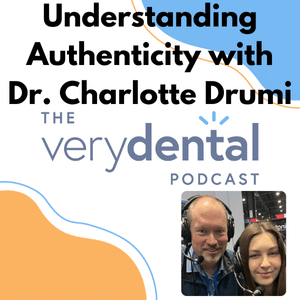
15:508">Alan is joined by Dr. Charlotte Drumi for an "in person" recording from the recent Chicago Midwinter Meeting! She's a young dentist with an old soul and Alan learned a lot from this conversation!
15:508">They discuss Charlotte's journey from documenting her dental school experience on Instagram to becoming a recognized content creator in the dental field. They delve into the challenges of social media, the importance of authenticity, the pressures faced by new dentists, and the impact of her international background on her perspective.
17:23">Key Talking Points:
- 31:72">Social Media and Authenticity:
- 31:72">
- 28:79">The importance of sharing both professional and personal aspects of life.
- 29:64">Balancing curated content with genuine, "raw" experiences.
- 30:65">Building connections through interactions and storytelling.
- 31:72">The change from highly curated content, to more authentic content.
- 35:64">Navigating Social Media Platforms:
- 35:64">
- 33:70">Focus on Instagram, with considerations for expanding to TikTok.
- 34:67">Managing the time and effort required for multiple platforms.
- 35:64">Adapting to changes in social media trends, such as Reels.
- 39:80">Content Creation and Community:
- 39:80">
- 37:75">Motivations for creating content: connecting with and helping others.
- 38:75">Receiving positive feedback and witnessing the impact of her content.
- 39:80">The evolving nature of her audience, from students to practicing dentists.
- 43:57">Challenges and Pressures:
- 43:57">
- 41:74">Balancing content creation with the demands of practicing dentistry.
- 42:73">Dealing with the lack of privacy that comes with a public presence.
- 43:57">The constant need to "feed the beast" with content.
- 48:70">Mentorship and Early Career:
- 48:70">
- 45:52">The importance of mentorship for new dentists.
- 46:82">Collaborating with experienced doctors and learning from their perspectives.
- 47:83">The challenges of finding quality mentorship in the current dental landscape.
- 48:70">The differences between older and newer generations of dentists.
- 52:67">Dental School Debt and Finances:
- 52:67">
- 50:63">The financial pressures faced by recent dental graduates.
- 51:55">The lack of financial education in dental school.
- 52:67">Strategies for managing debt and building financial literacy.
- 57:35">International Background and Perspective:
- 57:35">
- 54:96">Dr. Drumey's upbringing in Russia and its influence on her work ethic and resourcefulness.
- 55:51">The value of education and pursuing passions.
- 56:67">Adapting to the "first world struggles" in the United States.
- 57:35">The importance of skepticism.
- 62:90">Advice for New Dentists and Dental Students:
- 62:90">
- 59:58">Staying true to ethical beliefs and personal values.
- 60:53">Focusing on the reasons for entering dentistry.
- 61:54">Embracing challenges and learning from failures.
- 62:90">The importance of looking in the mirror, and being proud of the choices you've made.
- Social Media Comparison:
- 64:53">Advice for people who struggle with comparison.
- 65:37">The importance of authenticity.
- Taking social media with a grain of salt.
Some links from the show:
Join the Very Dental Facebook group using the password "Timmerman," Hornbrook" or "McWethy," "Papa Randy" or "Lipscomb!"
The Very Dental Podcast network is and will remain free to download. If you'd like to support the shows you love at Very Dental then show a little love to the people that support us!
--
Crazy Dental has everything you need from cotton rolls to equipment and everything in between and the best prices you'll find anywhere! If you head over to verydentalpodcast.com/crazy and use coupon code "VERYDENTAL10" you'll get another 10% off your order! Go save yourself some money and support the show all at the same time!
--
The Wonderist Agency is basically a one stop shop for marketing your practice and your brand. From logo redesign to a full service marketing plan, the folks at Wonderist have you covered! Go check them out at verydentalpodcast.com/wonderist!
--
Enova Illumination makes the very best in loupes and headlights, including their new ergonomic angled prism loupes! They also distribute loupe mounted cameras and even the amazing line of Zumax microscopes! If you want to help out the podcast while upping your magnification and headlight game, you need to head over to verydentalpodcast.com/enova to see their whole line of products!
--
CAD-Ray offers the best service on a wide variety of digital scanners, printers, mills and even their very own browser based design software, Clinux! CAD-Ray has been a huge supporter of the Very Dental Podcast Network and I can tell you that you'll get no better service on everything digital dentistry than the folks from CAD-Ray. Go check them out at verydentalpodcast.com/CADRay!
[00:00:00] Okay, let's talk about one of the most underrated tools in your practice, the dental mirror. It's in your hand all day, every day. But have you ever thought about how much it actually impacts your work? If your mirrors aren't giving you a crystal clear view, you're working harder than you need to. That's where Zerk comes in with their Crystal HD Dental Mirrors. I love these mirrors. I keep two in every single setup just in case I drop one. These aren't your average mirrors. They're so much brighter than the standard ones. That means better visibility, reduced eye strain, and more confidence during every procedure.
[00:00:28] And they're durable and lightweight, designed to reduce hand fatigue and improve ergonomics, so you can work comfortably even during those long demanding days. Plus, your patients will love them too. Available in a variety of vibrant colors, these mirrors are made with durable resin to prevent galvanic shock and eliminate the unpleasant clanking against teeth, ensuring a more comfortable experience for everyone. Upgrade one of the most important tools in your kit with Crystal HD Dental Mirrors from Zerk. The moment you bring one into the oral cavity, you'll be amazed at the clarity and brightness. It's like seeing your procedures in a whole
[00:00:58] new light. Maintaining optimal ergonomics is essential for a long and healthy dental career. That's where BQE comes in. BQE stands for Back Quality Ergonomics. I swear by a BQE model called the Ergodynamic, but they have a variety of styles that can fit you and your whole team. Keep listening to Very Dental to hear a conversation I recently had with Stephen Hoxma of BQE about their commitment to creating the best seating for dental teams. If you're looking to improve your workspace and well-being, check them out at bqe-usa.com.
[00:01:30] This is a production of the Very Dental Podcast Network. This is the Very Dental Podcast. Welcome to the Very Dental Podcast, where you'll find entertaining and relevant conversations with visionaries, clinicians, and your friends in the dental space. Now, here's your host, Dr. Alan Mead.
[00:01:59] Very Dental people, welcome to another episode of the Very Dental Podcast, recorded live in person, which is really cool because we do a lot of remote stuff. At the Chicago Midwinter, I have a guest that's never been on the show before. You probably have seen her before. Dr. Charlotte Groomy. Charlotte, how are you doing? Good. Thank you for having me. So, I know Charlotte because I've followed her social media stuff. I'm an Instagram guy. I don't really do TikTok. I don't know if you're a TikTok person because I'm not on TikTok.
[00:02:28] But I've seen your Instagram for years, honestly. When did you graduate from dental school? 22. 22, okay. She went to Loma Linda, which as my dad was trying to tell me, that's where I needed to go to dental school a long, long time ago. I'm not exactly sure why because he went to the University of Detroit. And you have been doing kind of social media influencer kind of stuff. And I know influencers hate when you use the word influencer. We do. That is true.
[00:02:56] That is true. I know that about it. But it's a good description for knuckleheads like me that don't really have other ways. A content creator might be a little bit fair. Yes, that's the word I like to use, content creator. That's better, better. Okay. But you've been doing that since dental school. So tell me, how did you decide that you were going to start doing this content creation? Because Instagram can be, and TikTok can be just like dorky cat pictures and stuff like that.
[00:03:22] But then some people take it to a much higher level. I'm just curious, how did you decide and where did it start? So originally, I was in dental school and I wanted something to look back at. And that's how I kind of started documenting my journey where I would share pictures, post things. And I saw this whole influencer slash content creation that was starting to get popular in the medical and dental field.
[00:03:50] And I'm like, well, I can share the things that I'm going through. And my Instagram account was like an online diary, if you may. It is. That's actually a really good description. You don't necessarily think about it, but if you do look back at your own, you can go, oh yeah, I was in North Carolina for spring break last year at this time. It actually kind of is. It's a good point. Yes. So it was just a way of documenting my journey. So I had something to look back at. Dentistry didn't come easy. I was an international student. I went through undergrad.
[00:04:19] English is my second language. So a lot of different things were a struggle and I just wanted something to look back at. And so this is how I'm like, well, I will start sharing these things. And people started following. People started sharing the content, reaching out with questions. I've had pre-dental students ask me, oh, would you give me some advice here or there? And so somehow it became something bigger than just an online journal. And people started reaching out and following and it started growing.
[00:04:47] And I never realized the potential that social media can have when I was starting in the beginning versus now what it has grown to and become. No, I think that it is funny because like the content creator influencer, you see a lot of it now. And I think people, it's starting to catch on and people realize it's like this thing that they can become. And whether it's like a side hustle or a way to become known and that sort of thing. I don't, like I tend to, like I've been podcasting for 11 years.
[00:05:16] And in some ways it's made, I've, my people have known me from the podcast, but it's, but frankly, I have an Instagram, but it's like, you know, it's just, I, I, the podcast is released on an RSS feed and people can get it on their software. And that's kind of, I've, I've mostly been an audio thing and I never looked at it in a way. And I know a lot of dental podcasters have kind of switched to more short form video content.
[00:05:43] Like the podcast still goes on, but it's almost a secondary thing to, and it might be because that's where people are. That's where people are consuming. Yeah. It's one of the reasons, but also people want a personal connection. And I think audio is a great way, but it only gives you so much. So there is a professional aspect of an Instagram account or a content creator, but there's also the behind the scenes. So your basic lifestyle, you know, family traveling.
[00:06:12] And when people follow you and kind of see your content, they start learning more about you and they want to know more about your maybe non-dental type of, or not non-dental part of your life. Yeah. And that's really what content creation and connecting with your community is. It's a lot more than just let me share a pretty picture.
[00:06:34] It's more of, let me share my authentic, real and raw journey, even if it's maybe something I'm ashamed of or something that I've had in the past that overcame. And just the connection that you can build with not only audio, but the video of it, the comments, the replies, it all just kind of comes together. And you have this pretty much like a live interaction with someone. So, I mean, I know you from Instagram. Are you on TikTok as well? I actually just created TikTok. Interesting. Five years later.
[00:07:04] Don't have a single post there yet. TikTok and literally just like copy over or duplicate their stuff for Instagram. I think, and then some people it started with Instagram. But what is interesting is like, I mean, I don't know that, I don't know what's going to happen with TikTok. I think no one really does. Although it sounds like it's probably going to resolve. It's kind of too important of a platform for someone to just let go away.
[00:07:33] I think there were some people who are really TikTok heavy that were nervous about it. It doesn't seem like they're as nervous now. So I think that's probably. It was deleted. Now it's back. So there's definitely mixed kind of opinions, but it's probably going to stay or at least transform into something that will hang around. I don't think. It's too huge of a thing. I don't think it's going to go away in that way. But it is interesting because like, okay, so I've had multiple people this weekend say, oh, I need to find you on LinkedIn. I'm like, I don't do LinkedIn.
[00:08:02] And it isn't because I think LinkedIn probably is a good place for some people. But there's so many platforms and you're sort of like, okay, can I spread myself that thin? You know, like, and if you're doing Instagram and you're doing TikTok and it's not the same content, God, you got another grind here. You know, it's like a, it's on some level. It's like, how do you, how do you know what the right platform is for you? So I think Instagram is where I started. And then when TikTok came out, it was more of a daily lifestyle content.
[00:08:32] And I was not quite about that at that time. And it felt less curated and more just, you just share everything like your dog, your food. It was just all over the place. And I liked Instagram more because I was originally on it, but also that platform felt comfortable. Yeah. Had the same features, you know, you're sharing video content, you're writing posts. So I felt like TikTok was very similar and I didn't see the need in doing both platforms at that time.
[00:08:59] And it is one of these things where you're like, you kind of have to think about it because you've only got so much time in the day. Now, as a, as this is what I really want to know because, okay, so I, I put out three podcast episodes a week. And when I started in 2014, oh my God, 2014, you're probably like in junior high. Oh my God. I was actually starting undergrad in 2014. That's when I came to the US.
[00:09:22] So 2014, I started podcasting and we would do one episode per week and it was an hour and a half long and it was multiple segments. And I mean, just the sheer amount of editing that went into that in, in like the process was really, I was doing all of it. I still actually do all my own audio editing because now I'm freaking great at it. I've been doing it for so long. You know, it's like, it is, it is, it is cool.
[00:09:46] I don't mind doing that part of it, but over the time I, we've changed, I mean, we've, I've changed a lot of things, but you just sort of know stuff better. Like when you start, you kind of don't, you don't really know where it's going. So you don't really, did you notice that too? Like you probably do things differently now than you ever did in the beginning. Yeah. There's a phrase that you haven't done it enough times and that's why you're not good at it. So there's no such thing as not being good at something.
[00:10:10] Just have to do it enough times to where it becomes so repetitive that it's pretty much automatic. Yep. And when I started social media and it would take me hours just to write a caption and take a picture and then edit it. And I was in dental school. So there's obviously the demand of doing well and, you know, thinking about your future. And so it did feel overwhelming to a point, but the longer you do it, the more automation you have. There's obviously different apps that make things easier. Sure.
[00:10:38] But, and the same thing with Instagram, once reels came out, I was kind of a little late to jump on that bandwagon of posting, you know, that short form. Video content. But the more I do it, like now reels take very quick to edit. I can upload everything. And sometimes people are trying to like, does it really take you hours and, you know, editing, putting it all together. It doesn't anymore. It doesn't anymore. And they're kind of shocked, but in a way it's because, well, it used to, and I've done it so many times that it's just a very easy daily thing.
[00:11:06] I will say too, the tools on board with Instagram, with reels are pretty slick too. I mean, that was a big change too. Like, you don't have to go to a browser and work on your computer and I don't like, you do a lot of it right on the phone. So I will say that, interestingly, sometimes I will use an app a lot of times to make short form content out of the podcast and put it up as a reel. And that's, sometimes that can do really well. And that's not very hard at all. It's pretty easy. You know, so they do, I will say they do make it a lot easier.
[00:11:34] And frankly, podcasting to be able to do like remote. First off, face to face, this is the best. It's really good. It's really easy. But I don't get to do it very often. Most of what we do is remote. And I remember what I had to do to get remote, to sound good and to edit. Oh my, the stuff I had to do. I built some pretty ridiculous computer setups in an attempt. And now all the software like does it easily. It's a piece of cake. So you know that. And so in 10 years, I wonder what else will be easier. I'm using AI to help with my show notes now.
[00:12:03] And show notes take no time. It was the worst part about podcasting, having to do show notes. And now it's a piece of cake. It's awesome. Like, so stuff is constantly making this production, the production part of it better. I mean, I know a lot of dental people have people that edit their podcast stuff. I'm going to argue that because I'm kind of right in the middle of it, the authenticity is real. Like, how does someone who's not a dental person know what's really good dental content? It's like, it's hard to offload that in my opinion.
[00:12:30] But in any case, the tools get better and better and better. And the more you do it, the more reps you get, the easier it is to do. I completely agree. So how do you feel like, how do you feel like, okay, three episodes a week, I'm always about a week to a week and a half in advance knowing what's going to go out. And usually I've, I've recorded stuff in advance. Sometimes I'm, sometimes I'm to the wire. I do a lot of, a lot of the one episode a week is oftentimes a monologue where I can,
[00:13:00] and that's the other thing when you podcast for a long time, people, I can't believe you can monologue. I'm like, God, I mean, it's just literally my inner voice just, you know, I mean, I might as well do it while I'm driving to work. Cause that's where I think of all this stuff or in the shower or something like that, you know? But you know, I, I'm usually thinking ahead of, this is what I need to do for this. And so I'm usually not down to the wire. Occasionally I am. But the one thing is you're always feeding the beast. You're always like a constant need for content to go out there. And I'm wondering how does that feel to you?
[00:13:28] What does that look like to you and how do you know what to schedule and all that stuff? So it definitely can feel overwhelming sometimes. And I'll be honest, and there are days when I don't want to show up and don't share content because, you know, and sometimes you feel like you don't quite have the privacy that you want. Yeah. And there's definitely those days, but which is funny because you're sort of like when you're doing it. Yeah. Privacy is kind of not a thing. You're sort of put it all out there. And then there's days you're like, why am I, why am I showing the world everything?
[00:13:57] It's just weird sometimes because there's obviously people that follow me in person that I know have been friends with maybe, you know, someone from the office and I share something online and they're like, Oh yeah, I know you went skiing or snowboarding. And I'm like, how did you know? I'm like, Oh yeah, that's right. Cause I haven't talked to you, but you've seen my content. And sometimes you're like, I wish I had more privacy. Cause I feel like a lot of people know things I do, but at the same time, like you're saying, you have to feed the beast. You have to put out content and you want it to be engaging. You want it to be interesting.
[00:14:24] You want to be really good at storytelling because again, a pretty picture is just a pretty picture. If it has no context to it, it's nothing more than that. It's probably, probably a very good point. So I think what motivates me is there's, like I said, there's definitely times when I don't want to show up, but I do get a lot of positive feedback from dental students, from pre-dental students. You know, I've had private messages where, Hey, I followed you for, you know, three years now. And the things you're sharing and resonating that with, so with it so much.
[00:14:53] And thank you that, you know, you helped me through this, you know, something in dental school or maybe before that. And I don't even know these things, you know, and that's the beauty of social media. Sometimes you share something that's very personal that you've maybe had struggled through and that's it. You shared it at two years go by and someone reaches out and says, Hey, that story that you shared a while back is actually what made me want to switch careers and change into dentistry. And I actually had messages like that.
[00:15:20] And so just getting the feedback from my community is probably the most rewarding. And that's really what keeps me going and keeps me wanting to show up again. That's cool. That's cool. I mean, I, and I will say I've had lots of interaction. Frankly, I have people that I didn't know before I started the podcast that are good friends and stuff like that. It's, it does, it helps with that. And it is funny because, uh, you know, once you put it out in the internet, it's kind of forever, which sounds horrible.
[00:15:48] But then you're like, you're like, someone will bring up a podcast I recorded seven years ago. I don't even remember it. Oh, this really affected me. This was really, oh, I should go look and see what I said. You know, it's one of those things where it's been like when you've been doing it long enough, you almost, you know, cause to you, it's sort of like one kind of constant moving forward. And then you're sort of almost forget some of the things you did. I, I just recorded an interview with a friend, Dr. David Clark, who I, when we were early
[00:16:14] on in the podcast, he was on constantly and I hadn't, I hadn't talked to him for probably five years. He's like had a heart attack yet. It was really cool. And you're like, oh yeah, I remember this. This is wild. It's, it's nuts. What, what you created in the past is still there. Yeah. Yeah. Oh, a hundred percent. It's wild. Like it's, it's very cool. And I mean, you're going to, you're going to run into that too. I mean, the fact that you started this in dental school and now you are a practicing dentist is like, that's, that's wild. It's like, it's like a document that you're going to be able to look back on for a long time. Yes.
[00:16:43] And as you evolve as a person, you know, first you're a student, then you're out into practicing and you're a new grad. Now you're kind of a new grad, but not quite a new grad anymore. You know, I've almost three years into practicing and you change, you evolve and so does your community. So some people unfollow others join and it's just going to be that constant change, which is awesome because you change and the community changes with you. You ever look back at some of your old stuff and cringe a little bit?
[00:17:10] I listened to older podcasts and I think to myself, God, we were terrible. We were just horrible. And yet the reality is, is it even hit back then. It was okay back then, but like you've, I've refined how I do it. I'm like, Oh my God, I can't believe I left that in or whatever. And you're like, it hit then. It was fine. Then it literally is part of the community now because it was built on that. But it's easy to look back and cringe on some of the stuff that I did. It's so funny. It is.
[00:17:38] I used to say that because, and I don't think that anymore or I've changed my perspective on it. And I've even shared that on social media. You know, first, this is the advice I was given as a new grad and I did not know better. And that's what I followed. And now having a little bit more experience behind my back, I started changing certain things clinically. And I've shared about, you know, an instance that I had where in the past I would always offer the best, best type of treatment, no matter who the patient was. And that was very limiting.
[00:18:05] And once you're joining private practice and kind of seeing how they run things. And I work with five or four more great, great doctors that have a lot of experience behind their backs and just the opportunity to see their clinical perspective and then make small modifications to your own is always helpful. And then I just share that transition and share that journey. You have. I've noticed, I've noticed that some too. I actually asked you a little bit about that.
[00:18:31] But so I will say that like, the other thing is you're, you're, you've talked about a lot of the people that follow you and interact with you are pre-dental and dental, but you've got to have some dentists there too. Yeah. At this point, for sure. That wasn't the community that I started with because I was a student, although there was a, you know, a probably small portion. But at this time, I think quite a few are dentists and I would probably say, I don't know if it's the majority, but a really good amount of the followers are, yes, dentists.
[00:18:59] It sounds like you're making, your journey's turning toward more surgical. What do you think? Is that real? It is. So I'm the type of dentist that enjoys everything. Yeah. And wants to do everything well. Obviously, that's not always possible. Sure. So I'm still figuring out if I want to niche down into something specific, but surgery has been an interest. And I've had a lot of experience at the previous office that I was at and at the new office that I'm at.
[00:19:24] Also, the owner doctor does anywhere from anything from all in fours to single implants to over dentures. So it's been something I've been exposed to ever since I started out as a dentist and it really piqued my interest in the beginning. And I have followed that interest ever since. Nice. So what would you tell new dentists? I guess you're in a situation where you're working with a lot of experienced docs and the word mentorship gets thrown around a lot.
[00:19:52] And I'm not sure that we understand mentorship as well as maybe older generations of dentists. Do you feel like you're getting some mentorship or leadership from the docs you're working with now? I really do. And I think mentorship is more than just, okay, this is how you do things. So let me just throw you and you figure it out and do it on your own. It's just having the opportunity to go to your owner doctor, because I am an associate
[00:20:16] or the other doctors in the office and just collaborate and ask for ideas, troubleshoot certain cases because dentistry is extremely complex. You know, there's multi layers to the patient, to their disease. Sure. So just having that opportunity is incredible. And I truly feel that the mentorship is there. Yeah, that's good. Because a lot, you know, the story, a lot of dentists that are, you know, within the
[00:20:44] first few years of graduating, first off, there's a lot of pressures that you guys had that I never had. And mentorship, I think, is harder in some ways. I don't know that there's as many experienced docs that are willing to take the time. So that's good for you. Yeah, for sure. There's a cost that comes with it, obviously, because, you know, if you're wanting to expand your skills and maybe start molar endo or complex surgical procedures, you're going to need more time.
[00:21:11] You're going to need someone to watch over you and help you through that case. And a lot of the owner doctors or just dentists in general don't want to put in the time because what's their investment? You know, that associate can leave in a year and they'll put a practice across the street. Well, maybe not across the street, but, you know, the point is they can always leave and what's there for the owner to invest into their associate. And I think there's a lot of disconnect with the generations.
[00:21:39] You know, some people are great dentists, but maybe not really good mentors. You know, there's a skill and the ability to explain things rather than doing something well. So I think there's that disconnect as well. I'll tell you, my dad's a dentist and he graduated from the University of Detroit in 1968. He practiced for 40 some years. He practiced for a long time. He's retired now. He loves it. He misses it. We still go to CE together and stuff like this.
[00:22:08] And he had a big practice in the town that I live in, Midland. And this guy, my dad had a series of associates over the years. I'm going to tell you this. This is not how I would recommend anyone does it. But what's crazy is like, I know all of his associates still. I mean, I know he would, they would come work for him and then they would find a practice and buy it. And he, and, and in town. And he was like, you take anyone that wants to go.
[00:22:37] It was everything with dad was a handshake deal. He, he, he brought on multiple associates in, in over time, these people, I mean, it was like he had his little stable of these successful dentists that were just, they were tight. They knew each other, but it was like, he invested in them in some ways, like you just said, and then was trusted them to, you know, there was no backstabbing or anything like that. That it was not, it was not like super competitive. And the person felt like I really want to do my own practice.
[00:23:05] I mean, and some of these, these guys, literally one of them, a couple of them have sold their practices. Like there's been an entire career worth. And they started with my dad as an associate. Like that is really uncommon. Frankly, probably having a handshake deal, probably not a great way to do things at this point. But, but it was, it's interesting to know that that happened. That was a real thing. And we need more of that these days because again, you have, I think you're right. You have these younger doctors that are joining the field. They're still trying to figure out the skills and things of it because honestly, dental
[00:23:31] school education is very outdated and that's a whole nother topic, but it doesn't prepare you for the real world dentistry in a lot of different ways. In my opinion, it never really, like I didn't feel very prepared back in 1997 and God only knows. I can only imagine how you, I mean, and you're a, you're a COVID grad. I mean, you graduated in 2022, so COVID was a thing while you were in dental school. So I'm just like, oh my God. So, I mean, I thought I wasn't prepared and you like your main clinical years were really affected by that.
[00:23:58] Which I got to say, I felt like I had a really good experience clinic wise. And even though we were affected by COVID, it was really the difference I think now is you have to be really proactive because you have the opportunity to do a lot of clinical dentistry, but it's up to you to call the patient, to show up, to not just oh, my patient didn't show up. Well, I'll just go home and sleep, whatever. Go to the grad clinic, go to the grad pros, go to the perio, watch the residents, you know, maximize your time in dental school.
[00:24:27] Because I see a lot of students like, oh, well, this is not real dentistry. So I'll just get by and then graduate. And only then I'll understand and really learn the real world dentistry. But you're going to be eating right away, right straight from school. I wish, I wish that I'd had a mindset like yours. I was literally just trying to survive. And mind you, we didn't have the option to not, like if we didn't have a patient, we had requirements to be doing something. We did a lot of full mouth sets. Let's just say that. If you have a patient or you did a lot of oral medicine diagnosis appointments, because
[00:24:56] you'd show up and they'd tell you where you needed to go if you didn't have a patient. But the reality is that is a good way. Like dental school, you can get away with kind of fading out like that. But you, I mean, you're there paying top dollar to be there. You might as well squeeze every bit out of it that you can. No, it's not. It's not. I mean, like, and I mean, I do, I've podcasted about this a lot and I've, I've had an opinion and I feel like, but I've never, I don't know that I've actually asked a person who's
[00:25:24] a recent grad, how do you feel about the debt situation? How do you, how do you and your colleagues, your relatively new grads, how do you feel about it? I think it depends on your debt tolerance and everyone has different one. You know, there's people that go into have debt from undergrad dental school, they go to residency and then straight up, they open a startup and open a practice. And you can imagine that's an insane amount of debt. So there's definitely variation to it. And like I was saying, your debt tolerance matters.
[00:25:51] But I think the most important thing is being in this profession for all the right reasons. You know, you used to hear, oh, dentistry, it's a very lucrative field. You're going to have a good living and a lifestyle. And that's when I have a mentor that kind of got me into dentistry. I was only 13 years old at that time back in Russia. And this dentist came to do kind of free dentistry in our community. And I spoke English. I assisted him and just fell in love with dentistry. And like I was saying, I was only 13 years old.
[00:26:18] And he was like, Charlotte, you could be really good in this profession. I see how you catch up on things really fast. And that's how I kind of got a sense for dentistry. But he was saying, it's a great career for women. It's very profitable. You can have a great practice. He's like, this is not the reason you want to go into this field. But there's a lot of good things about the career. And I think the more of the time, but let me kind of tell you the backstory. He graduated in 1960. Okay. Or 1950. I'm going to say 1960. Okay.
[00:26:48] So he's been practicing for 50 years. He is retired now. But I'm sure your dad can attest to that. But things have dramatically changed over the years. He's like, well, yeah, I paid out my dad in two years. My dad said, like I said, University of Detroit. In the summers, he worked in a foundry, the River Rouge foundry for GM. He was like the guy who, I mean, it's like the worst job ever. But it paid pretty good. And he's like, yeah, we pretty much paid for it as we went.
[00:27:18] And he married my mom right before he started dental school. Actually, like two days before he got married, he realized that he had passed his summer school organic chemistry because he'd failed it the first time. So he knew he was going to get to go to dental school. So like, like it was, but, but the other thing is, is like, I always wonder if, if, okay.
[00:27:40] So when you come out of dental school now and you have, you know, six, six digits worth of debt, do you know in dental school how much that's going to cost every month? Like, do you understand what that nut is or do they not do? Probably yes and no. They don't really do a good job at teaching anything finances, whether that's practice ownership, whether that's, you know, being smart with your finances.
[00:28:03] And when I was graduating dental school, so first of all, the way I had kind of my debt management, because I'm like, well, yes, it is a lucrative field potentially, but you still have, you know, doesn't mean you can just splurge and take out more loans than you need to. So I was married at the time and my husband and I, you know, he had the opportunity to work part-time. And so we didn't have to take out loans for everything. That's a pretty good way to do it. Yeah. It was a very just bare minimum. Okay. This is what I need for school. This is the tuition. And these are just a little bit on the side.
[00:28:32] We paid through a lot of the things. You have classmates that didn't look at things like that. I guarantee you. I guarantee you. Yes. And that was one strategy. And so when I was graduating dental school, I'm like, I'm going to pay my loans as soon as I can just to get this debt out of my head and not have to worry about it. And then you get into the real world and you start understanding investments. And how do you manage your money? Because you go from zero net income to, you know, six figures income in literally overnight.
[00:29:02] So that was something that I wanted to start researching because I want to be smart about my finances right from the very beginning versus 10 years into aggressively paying your loans just to find out, you know, you now have a net worth of, you know, negative $3. And, and yeah, I mean, clearly there's people smarter than me that know the strategies on this stuff. It sounds like you've thought about it. Definitely looked into the things for sure. Yeah. Yeah. I mean, I have a lot of things I want to ask you, but I guess I got to ask you this.
[00:29:31] What do you think coming from Russia brought you to here? How, how do you think that you look at what you're doing now? How does your upbringing, your first 13 years in Russia, how does that affect things? Because I, I've, I know some people from Russia in particular, or even Eastern Europe that have a very different take on almost everything because of how they were raised. And that's very true. I think we're very resourceful. Hell yeah, you are.
[00:29:59] Because things didn't come easy in my childhood and my parents. I grew up in a very simple family. We were probably not even considered middle class. You don't have a car, you walk to school. So I think the quote, first world struggles are very real. And a lot of that I find very funny, which you're kind of here and getting used to those things now. That is amazing. But back in the day, it wasn't a thing.
[00:30:27] Like you could not, you could not have a better way to adjust your attitude than an upbringing like that. You couldn't. And I would not want to change anything for it. You've seen some stuff. You've seen some stuff. And so coming in and hearing, honestly, I sort of laugh. I'm like, and now you're able to like literally part of your living comes from being an influencer. Like, can you tell your 13 year old self? No, no, no. Get a load of this. Like that's, it's nuts. It's kind of awesome actually. It is.
[00:30:53] But I think it gives you a tolerance for, for just stuff happening in your life. Because you've seen some stuff. Very much. Yeah. Very much. When you come from this background, you know, you're not really afraid of things. Nothing can hurt your feelings. I think our generation these days is a lot about feelings and not maybe the reality. And that's not really going to get you much in life. And that's kind of the principle that my husband, he's from Ukraine. Okay. My husband and I lived through.
[00:31:19] And like I mentioned, resourcefulness is a big one because when you grow up not having a lot of things, you figure out how to get, how to get those things and get what you need. And I think the most important thing is the wisdom that my parents had, you know, maybe they didn't have a lot financially, but the wisdom and the vision to an education, to pursuing your passion and instilling that early on is what made the biggest difference. Because it doesn't matter what your career is.
[00:31:46] If you're really passionate about what you do and you have insight and vision, you're going to succeed even if you're, you know, just anything in life. And I think just living by that principle and staying true to yourself and really tuning into what you want to do in life and following that, not being afraid to try things. Because the worst thing can happen is maybe you'll fail, but you'll try again and you'll fail again. And that can happen many times, but then you'll succeed. Yeah. That's the ultimate result. You will succeed.
[00:32:15] You'll just learn from your past experiences, change things and reroute and still come out victorious. For sure. Now here's a question. You get to the United States. Did your parents ride you pretty hard about school? Were they tough on you? They weren't. Or were you, were you just kind of driven? I was very driven. I was a very motivated person. Just, I think that comes with just the personality I was born with, maybe the circumstances I grew
[00:32:39] up, but my parents were actually very supportive and never pushing, but I understood the sacrifices that they made for me to be here and I don't have a chance. I can't fail. I have to succeed. Most recent immigrants that I've talked to, school was just like, what are you talking about? This is the opportunity. This is, I mean, I've got, I've got two sons who do pretty well in school, but they don't have motivation like I suspect you had.
[00:33:07] Like, oh, and boy, do I try, but they just don't, they don't understand the opportunity that the education can give you. And I mean, like, let's be honest, like almost the worst place in the United States is still a pretty great place to get a public education. Yeah. It's like, it's kind of nuts. It's kind of nuts. And I think sometimes we don't realize that. So like, I didn't realize that you were, you, you had come from Russia. I didn't, and it, I mean, it's a whole other angle. I just, I'm very impressed. But I also think it's interesting that my friends that I know, particularly dentistry from
[00:33:36] Eastern Europe, they all have like, their stories are so similar. It's so similar. And it's, and, and typically they're really successful because they're really driven. And that's why you don't want to be afraid of the challenges in life because that's what really molds and mends your personality and your success story because no one has ever succeeded without failing in the past. And we always see the end result, but we've never seen what that person has gone through to get where they're at.
[00:34:01] One of the evils of social media, because you see, you know, it's easy to compare your insides with the outsides of the people you see on Instagram. So I'd love to know, what do you think about that? What do you tell someone who, who struggles with social media stuff and has that little problem of comparison? I think it's not for everyone. So if you're a person that maybe gets easily jealous or you're a person that can't tolerate criticism, you really have to have tough skin doing social media.
[00:34:28] And it doesn't matter whether it's a podcast or YouTube or Instagram, TikTok, whatever it may be, you have to have tough skin because you're not going to be liked by everyone and you don't have to. Yeah, you're not everyone's cup of tea. And that's not a big deal. You know, you find your community, you share your journey and that's it. You know, you don't have to be someone that is liked by everyone and there's, there's nothing wrong with that. Like it would be impossible. How about advice for consumers of social media that have a hard time with the comparison?
[00:34:57] Let's just say someone who's recently graduated from dental school, seeing what you're up to and going, God, look at her. How do you, how do you, what do you say to that person? What do you, how do you help that person? Because I got to tell you, the comparison thing is a problem for a lot of people, myself included. And, and social media is like a comparison engine. I mean, it's no, there's no better place to see. You can look at what one person is putting out there and going, wow, look at what that person is doing. What am I doing? I've done like all this mess. Like it can be inspirational.
[00:35:26] It can also really get in your head. So what do you tell those people? Yes. And I've definitely had experiences like these, you know, there are times of growth in your social media and then there are times when you're putting out content and it's not getting the engagement. You're starting to wonder, is it my content? Is it something else? So, you know, as someone who puts out content out there, there's always going to be those phases. But I think for consumers is, I think the most important, let me reroute. I think the most important for those who do content creation is putting out their authentic
[00:35:56] journey because yeah, social media is a highlight. So you just see little bits and pieces of someone's life and usually it's very curated and perfect. But I think that's something we're going away from in social media in the last few years. And it's now more about authenticity and sharing the struggles. Because if I have gone through something that I had a hard time with, I want to share that because it's, if you don't have that in life, then you're not a real human and you can't make that genuine connection with your community.
[00:36:22] And so any challenges that you face, yes, of course you want to share your wins and your amazing results. Everyone has that. You know, you want to take pride in your education and the sacrifices you've made. But you also have to share the things that maybe haven't worked out in the past and be very honest about it. So that's my take. And for the consumers, always take things with a grain of salt because you never know how honest and genuine that person is and what their intentions are.
[00:36:51] And that's another thing I think that comes with the cultural background that I'm from. We're, you know, our parents grew up in the Soviet Union where you couldn't trust the government. You couldn't trust your neighbor. You couldn't trust anyone. And they also came from a Christian background. So that's another layer to the complexity of living in the Soviet Union. So we're always very, extremely skeptical. Skepticism. Yeah. Yeah. You have to. You have to be because you don't know if the person that's right next to you smiling in your face has the best intentions in mind. Yeah. Wow. That's so good. Man, that's really good.
[00:37:21] Okay. One last question. This is probably not going to be our last podcast. You're very good at this. Thank you. I would like you to think of a late dental student, maybe fourth year student, early grad, like maybe a year out. What's a great piece of advice that you would have liked to have had at that time that might have been helpful for you?
[00:37:43] I think staying true to your ethical beliefs and always staying true to the reason that you went into dentistry. And again, if you join this career and profession for all the right reasons, that will always be your guide because it's very easy to fall for a good salary, maybe a great location, but you have to make sacrifices along the way somewhere because you're a new grad. You still have a lot to learn. You have a long career in front of you.
[00:38:13] So staying true to yourself, staying true to what you believe in and never taking a side and just being on that journey. I think the authenticity and first and foremost to yourself, you want to wake up in the mirror and look at yourself or I'm sorry, wake up in the morning, look in the mirror and tell yourself that the decisions I have made yesterday have made me better and have made me closer
[00:38:39] to being a better clinician, a better person, a dentist that I have stride for because you've sacrificed a lot of time, a lot of, it's a big investment to become a dentist. So you want to make the most of it and staying true to yourself and your journey and your values, I think is the most important. That's terrific. Charlotte, you're very good at this. I really appreciate you being on. We'll do it again sometime. And I will make sure to put all your socials up in the show notes so people can chase you down and follow you there and all that stuff.
[00:39:08] But I really appreciate this. It was fun. Thank you so much. I had a good time and I'd love to be back. Excellent. Thanks.