"They always talk about how the independent dentists are providing better care than the groups are, the corporate dentistry. Well, that's not necessarily true. If you really study the tools that they have that the independent dentists have not yet adopted, most of the independent dentists are far behind the invisible DSOs and DSOs from a patient care and a technology adoption."
Chip Fichtner, Large Practice Sales
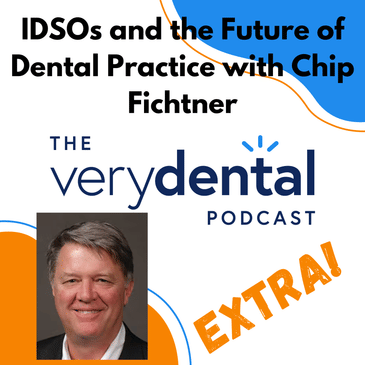
Alan is joined once again by Chip Fichtner of Large Practice Sales to talk about Invisible DSOs. Some of our topics included:
- How did Chip get in to IDSOs?
- Large Practice Sales only represents doctors!
- Why is dentistry a focus for investors?
- Consolidation in mortuary science, veterinary medicine and medicine and how they differ from dentistry
- The "Walmart-ization" of dentistry
- Technology and AI in IDSOs.
- Chip looks into his crystal ball
- Who will buy an average practice (not a large practice)?
- IDSO = full autonomy for owner dentists
- IDSOs and specialists...an interesting fit
- What does a "bad" experience with an IDSO look like?
- What does a "bad deal structure" in an IDSO transaction look like?
- How was COVID good for us?
Does an invisible DSO sound like something that would be a good fit for you? Get in touch with Chip at Large Practice Sales!
[00:00:01] [SPEAKER_00]: This is a production of the Very Dental Podcast Network.
[00:00:10] [SPEAKER_00]: Sometimes you just can't get enough Very Dental. Sometimes you need a little bit more. Now is one of those times. Welcome to the Very Dental Extra.
[00:00:21] [SPEAKER_00]: Very Dental people, welcome to another episode of the Very Dental Extra Podcast.
[00:00:27] [SPEAKER_00]: Today's show is brought to us by our friends at Large Practice Sales and we're featuring again a guy that you've gotten to know pretty well over the last couple years, Chip Fichtner. Chip, how you doing?
[00:00:37] [SPEAKER_00]: I am doing great. How are things in Michigan today?
[00:00:40] [SPEAKER_00]: It's good. It's good. Things are looking okay. Because when I'm done here, I'm planning on going on a ride on my bicycle, on my mountain bike. And so it's warming up as we speak. So if we're on here long enough, it'll probably be nice and warm by the time we get done.
[00:00:55] [SPEAKER_00]: Fantastic.
[00:00:56] [SPEAKER_00]: So Chip works with large practice sales. And I'm going to just, let me just throw this out here. This is what I think Chip does. What Chip does, he works with practice owners. And he, practice owners who are interested in working with invisible DSOs. That's what he does. He's, so he's not a broker per se. He's sort of the connection guy. He's the guy who, he knows lots about these different organizations.
[00:01:20] [SPEAKER_00]: He helps analyze a person's practice and helps kind of put you in contact with the right people. If, and actually probably helps you understand if an invisible DSO is right for you. How am I doing Chip? So far so good?
[00:01:33] [SPEAKER_00]: Doing great.
[00:01:35] [SPEAKER_00]: Doing great.
[00:01:36] [SPEAKER_00]: So, I mean, I am curious about this. How did you get into this business? I mean, like how did, how did invisible DSOs become Chip's thing?
[00:01:46] [SPEAKER_01]: You know, it was, it was luck and a little bit of timing. We, we started into this adventure about eight years ago. Okay.
[00:01:55] [SPEAKER_01]: Right. Uh, I had owned a previous dental company, which I had sold. And, uh, one of my clients in that company came to me and said, Hey Chip, I'm interested in monetizing my life's work by selling my 18 office multi-specialty group. And you're, uh, you're a past investment banker. Maybe you can help me. And so we did. And he paid us a $3 million fee. And I thought, you know, maybe this is a business.
[00:02:18] [SPEAKER_01]: Not so bad. Yeah, no, not bad. And, uh, so, uh, we, we started our business with a goal of working with larger practices, those that had at least $500,000 of EBITDA. And we made the fateful and correct decision to say, we were only going to represent doctors. Most of the people in my shoes represent both buyers and sellers, which we think is a big conflict of interest.
[00:02:43] [SPEAKER_01]: So by choosing to represent only doctors, our loyalty is only to doctors and achieving the highest value for them. And what we call an invisible DSO partnership, which is something every doctor should understand. It's, it's not a fit for everybody, but you should at least understand it because the invisible DSOs, uh, of which there are about a thousand in the U S today, uh, are growing rapidly. And just in the first six months of 24,
[00:03:11] [SPEAKER_01]: there was over $5 billion of new capital and financing injected into invisible DSOs. And, uh, that's a big amount of money for very shrewd groups that are interested in partnering with great doctors. And it's because of that capital, we've continued to achieve record values for our clients. And we've completed a billion dollars of these partnerships just in the last 24 months.
[00:03:37] [SPEAKER_01]: So it's, it's, it's a growing business and every doctor should understand them because they're in your community. You may not know it because by definition, they're not changing the brand of the doctor and they're not announcing that they're there, but they're there.
[00:03:53] [SPEAKER_01]: That's the, that's the invisible part, right? That's the, that is the invisible part.
[00:03:57] [SPEAKER_00]: Okay. Okay. And honestly, the invisible part is, is, has a strength in, okay. So a lot of people, God, I mean, people probably don't think this anymore, but I remember probably six, seven years ago when you'd think of DSO, you'd think of a brand thing like an Aspen or something like that. So, but, but now you'd say the majority of the action is in the invisible part. Is that right?
[00:04:16] [SPEAKER_00]: By far. So where does the money come from? What, why, why, why is it that dentistry is such a good place to invest in for these people? Why are they not looking at the, the mortuary business or the veterinary business? I mean, or actually they probably are, but why is, why is dentistry appealing to them?
[00:04:33] [SPEAKER_01]: You know, dentistry is appealing to them is because it has had a consistent long-term growth in revenues and that growth is actually accelerating. And frankly, COVID was probably the best thing that ever happened to dentistry because it proved that dentistry was resilient. So certainly we had our challenges during the COVID shutdown, but if you look at dental revenues today, they're continuing to grow.
[00:04:57] [SPEAKER_01]: And because of that investors see a long-term growth. It's a very unconsolidated mom and pop business. You know, the average GP practice in the U S does about $850,000 a year in collections. So it's, it's a small cottage business. And if you listen to the ADA and I think the ADA is a little off, but they say that about 20% of all dentists are now affiliated with an invisible DSO or working for a
[00:05:27] [SPEAKER_01]: DSO. So we're still in the early stages of consolidation. Whereas the mortuary business is heavily consolidated and vet is kind of on the same track as dentistry.
[00:05:38] [SPEAKER_00]: That's what I, that's what I've heard. Actually, there's some decent podcasts that have talked about both of those industries in the, as you, as you said, the mortuary business, if you want to kind of came before the dental business with regard to the consolidation and that sort of thing. So that is an interesting, I mean, if it's an interesting deep dive, to be honest, but.
[00:05:55] [SPEAKER_01]: I don't know. You can look at the MD business, right? The MD business has been consolidating for a long time and 77% of all MDs today work for a big group or a hospital or an insurance company. So, so we have something we can look at for reference.
[00:06:10] [SPEAKER_01]: Uh, but back to your question of why is so much money pouring in to dental consolidation. And the answer is it's been very profitable. You know, invisible DSOs are not a new concept. They've been around for 35 years.
[00:06:24] [SPEAKER_01]: And what has been proven in the reason $5 billion went into invisible DSOs and not the branded DSOs is because the invisible DSOs have a unique weapon that the branded DSOs don't have.
[00:06:37] [SPEAKER_01]: And that is that their partners, their practice partners all have doctor owners. So when you have an owner doctor, when you have a tough time, like COVID that owner doctor sticks around because he's got skin in the game. Whereas with the DSOs where they have employee doctors, they don't have skin in the game.
[00:06:55] [SPEAKER_01]: So the invisible DSOs have been more successful as an investment than the branded DSOs. I believe it's because of that glue of the fact that the invisible DSOs, all of their practices have an owner doctor partner who cares.
[00:07:10] [SPEAKER_00]: That's very interesting. So, okay. I want to go back to what you were saying about the medical industry a little bit, because I know that, I know that dentists are kind of there.
[00:07:19] [SPEAKER_00]: They tend to look at the medical industry the way that it consolidated and see a negative aspect to that. So in other words, like most doctors are now employees. They're kind of run by a company.
[00:07:31] [SPEAKER_00]: They're kind of – but I will say maybe the contrast is that a lot of the doctors, the physicians that are working in those situations now were never owners in the first place. I don't know.
[00:07:41] [SPEAKER_00]: Contrast the way you see how medical has consolidated versus how the invisible DSOs in dentistry are happening.
[00:07:50] [SPEAKER_01]: You know, I think it's different because the MD industry is really driven by the payers, right?
[00:07:57] [SPEAKER_01]: It's insurance driven. It's gotten more complex. It's gotten more technical.
[00:08:02] [SPEAKER_01]: It's the rules and regulations associated with the medical insurance business, both government and privately funded, are staggering.
[00:08:11] [SPEAKER_01]: And dental, as bad as dental payers are or dental insurers are, is relatively unregulated relative to the MDs.
[00:08:21] [SPEAKER_00]: Okay.
[00:08:22] [SPEAKER_01]: And again, dentistry, relatively smaller practices from a revenue standpoint.
[00:08:29] [SPEAKER_01]: You know, even if you look at specialists, according to the ADA, the average specialist practice has 1.2 million in collections.
[00:08:38] [SPEAKER_01]: So, generally smaller.
[00:08:40] [SPEAKER_01]: I'm not smart enough to tell you why MDs have consolidated to 77%.
[00:08:45] [SPEAKER_01]: I do not think dentistry will get there.
[00:08:47] [SPEAKER_01]: Yep.
[00:08:47] [SPEAKER_01]: Certainly not in my lifetime.
[00:08:50] [SPEAKER_01]: But there's a lot of consolidation left to go.
[00:08:52] [SPEAKER_00]: Yeah, that's very interesting.
[00:08:54] [SPEAKER_00]: Okay, so I want you to look into your crystal ball.
[00:08:58] [SPEAKER_00]: You will not be held accountable for this.
[00:09:00] [SPEAKER_00]: But I do want you to tell me and the listeners, what do you think the dental industry is going to look like in five years?
[00:09:06] [SPEAKER_00]: And then when you're done with five years, I want you to go even further, like 10 to 20 years.
[00:09:10] [SPEAKER_00]: What do you think the dental industry looks like five years from now?
[00:09:14] [SPEAKER_01]: You know, unfortunately, we have some precedent to be able to answer that question.
[00:09:19] [SPEAKER_01]: And the precedent, unfortunately, is something like a Walmart or a tractor supply or a Home Depot.
[00:09:26] [SPEAKER_01]: And the reality is the big get bigger because the big have access to resources that the small do not.
[00:09:35] [SPEAKER_01]: The average mom and pop store in small town America is not buying at the same price that Walmart is buying.
[00:09:41] [SPEAKER_01]: And because of that, you've seen a lot of those businesses get crushed by Walmart and by Home Depot and by Tractor Supply.
[00:09:49] [SPEAKER_01]: And that's going to happen in dentistry.
[00:09:52] [SPEAKER_01]: You're going to end up with boutique dental practices.
[00:09:55] [SPEAKER_01]: And you're going to end up with the big guys who have access to the resources to provide better service, lower cost, higher margins than the little guys can.
[00:10:06] [SPEAKER_01]: That's not unique to dentistry.
[00:10:08] [SPEAKER_01]: It's just the gulf is widening.
[00:10:11] [SPEAKER_01]: And I'll give you a couple of examples.
[00:10:13] [SPEAKER_01]: So today, an invisible DSO of any size is paying 25 to 30% less for supplies than an independent dentist is.
[00:10:22] [SPEAKER_01]: Now, supplies are not a big line item on your P&L.
[00:10:26] [SPEAKER_01]: But if you do implants, they're paying 50% or more less than you are for implants.
[00:10:33] [SPEAKER_01]: And the big new trend is that the bigger invisible DSOs have been able to negotiate higher reimbursement rates from insurance payers than the independent dentist ever could.
[00:10:44] [SPEAKER_01]: I talked to independent dentists ago.
[00:10:46] [SPEAKER_01]: I'm hiring a fee negotiator for me, and I'm going to get better reimbursement rates.
[00:10:51] [SPEAKER_01]: Well, the reality is that's great, but I promise you the invisible DSO that has 100, 200, 500, 700 partner practices is getting reimbursed at higher rates than any independent dentist in those same communities.
[00:11:04] [SPEAKER_01]: So, functionally, it's the Walmartization of dentistry and not because the invisible DSOs are providing worse care.
[00:11:12] [SPEAKER_01]: They're just doing it at a lower cost.
[00:11:15] [SPEAKER_01]: And so, ultimately, their margins are going to be better, and they're going to be able to adopt the new technologies that the independent dentists have not.
[00:11:22] [SPEAKER_01]: So, I'll give you an example.
[00:11:23] [SPEAKER_01]: I was speaking at a meeting a couple of weeks ago, and there were 200 people in the room, and I asked for a show of hands of how many of the dentists were using artificial intelligence within their diagnostic procedures.
[00:11:36] [SPEAKER_01]: Three hands out of 200 went up.
[00:11:38] [SPEAKER_01]: And I can tell you that there are thousands and thousands of invisible DSO offices that have already adopted AI.
[00:11:45] [SPEAKER_01]: And because of that, they're able to provide superior care than the independent dentist because AI provides a better diagnostic result.
[00:11:54] [SPEAKER_01]: And that better diagnostic result is good for the patients, and it's good for the bottom line of the invisible DSO or DSO.
[00:12:01] [SPEAKER_01]: And so, that gulf between costs and the ability to adopt new technology quickly is going to change the patient experience.
[00:12:09] [SPEAKER_01]: That patient who gets to see an artificial intelligence-driven diagnostic view of their mouth versus having the independent dentist try and explain to them what's wrong with their teeth, it's a big difference.
[00:12:22] [SPEAKER_01]: It's visual.
[00:12:23] [SPEAKER_01]: It's modern technology.
[00:12:24] [SPEAKER_01]: I mean, we all live with our little screens in our hands, and that's what's coming to dentistry.
[00:12:30] [SPEAKER_01]: And the doctors who have not yet adopted it are behind the curve, and they always talk about how the independent dentists are providing better care than the groups are, the corporate dentistry.
[00:12:40] [SPEAKER_01]: Well, that's not necessarily true.
[00:12:42] [SPEAKER_01]: If you really study the tools that they have that the independent dentists have not yet adopted, most of the independent dentists are far behind the invisible DSOs and DSOs from a patient care and a technology adoption.
[00:12:56] [SPEAKER_01]: Now, that is not a very popular opinion, and I will get tomatoes thrown at me for it.
[00:13:01] [SPEAKER_01]: But the reality is the bigger groups have the ability to test and prove out new technologies and new methodologies.
[00:13:09] [SPEAKER_01]: And AI is coming into the front door as far as how you communicate with your patients.
[00:13:15] [SPEAKER_01]: And doctors, the independent dentists are behind on this.
[00:13:19] [SPEAKER_01]: So, that was a long way of saying I think that ultimately we will have a series of boutique practices with independent dentists.
[00:13:27] [SPEAKER_01]: And then we will have the big guys, whether they're invisible DSOs or the branded DSOs, providing superior patient care and attracting more patients.
[00:13:36] [SPEAKER_01]: And it's something that everybody needs to understand because it's coming fast.
[00:13:41] [SPEAKER_00]: I'm curious about – so, you're talking about 20 – right about now or 20% invisible DSO penetration supposedly.
[00:13:51] [SPEAKER_00]: So, what do you think in 10 years, what do you figure the invisible DSOs will be – like how much higher will the penetration get in say 10 years or so?
[00:14:00] [SPEAKER_01]: You know, I believe that while MDs have gotten to 77%, I believe dentistry will not get that high because the typical dental practice is not something that an invisible DSO is going to buy.
[00:14:14] [SPEAKER_01]: They are not going to buy a $800,000 in collections practice.
[00:14:19] [SPEAKER_01]: And there are 100,000 practices out there doing $800,000 or less in collections.
[00:14:26] [SPEAKER_01]: And so, ultimately, I don't see us crossing 50% in the next 10 years.
[00:14:32] [SPEAKER_01]: But we're certainly going to get close.
[00:14:35] [SPEAKER_00]: Okay.
[00:14:35] [SPEAKER_00]: So, I got a couple questions there.
[00:14:37] [SPEAKER_00]: So, for the average practice that's not really on the radar for invisible DSO, and if there's a whole bunch of them, do you see – what do you see happening with them?
[00:14:48] [SPEAKER_00]: Do they – I mean, are those the ones that stay independent?
[00:14:51] [SPEAKER_00]: And it is an interesting thing because, like, if they're getting walloped by an invisible DSO because of their capacity to get better reimbursement, the more technology and lower costs, like what happens to those guys?
[00:15:05] [SPEAKER_00]: Because they're not going to be interested – the invisible DSO is going to be interested in buying a practice that small.
[00:15:10] [SPEAKER_00]: True.
[00:15:11] [SPEAKER_01]: And so, ultimately, you're going to have consolidators who will consolidate the smaller practices.
[00:15:17] [SPEAKER_01]: And that's happening today where you have dentists who are acquiring – retiring dental practices and folding them into their own or creating satellite offices out of that.
[00:15:29] [SPEAKER_01]: So, that consolidation is going on right now.
[00:15:31] [SPEAKER_01]: There are plenty of dentists out there buying other dental practices that are smaller so that they're making themselves big enough to be attractive to an invisible DSO.
[00:15:42] [SPEAKER_01]: Okay.
[00:15:42] [SPEAKER_01]: So, you have consolidation going on at two levels.
[00:15:45] [SPEAKER_01]: The doctor-to-doctor practice transition, as they call it, business.
[00:15:49] [SPEAKER_01]: And then you have the invisible DSO partnerships.
[00:15:53] [SPEAKER_01]: And then you still have the branded DSOs acquiring practices.
[00:15:58] [SPEAKER_01]: The branded DSOs, when they acquire practice, are acquiring 100% of it.
[00:16:02] [SPEAKER_01]: And the doctor becomes an employee and works for X years and then typically retires.
[00:16:07] [SPEAKER_01]: Whereas the invisible DSOs are not doing that.
[00:16:10] [SPEAKER_01]: They are not interested in a doctor who's over 65 unless he's got a series of young associates.
[00:16:16] [SPEAKER_01]: And we've had a big change in the world where, you know, in our billion dollars of these partnerships completed in the last 24 months,
[00:16:24] [SPEAKER_01]: 150 million of that has been for dentists in their 30s.
[00:16:28] [SPEAKER_01]: And that did not happen pre-COVID.
[00:16:30] [SPEAKER_01]: And I think part of the reason for that is because the younger dentists are now realizing that the invisible DSOs are not going to try and micromanage them or homogenize them or tell them what to do or how to set their schedule or what supplies to buy.
[00:16:45] [SPEAKER_01]: The invisible DSOs entire model is based on partnering with a doctor who retains ownership and continues to lead his practice as he has in the past with full autonomy.
[00:16:56] [SPEAKER_01]: Not just clinical autonomy, meaning they're not going to tell them what to do clinically.
[00:17:00] [SPEAKER_01]: But the invisible DSOs leave the doctors with full autonomy.
[00:17:04] [SPEAKER_01]: They're going to make the decisions as to who to hire, who to fire, when to be open, what supplies to use, what payers to take, et cetera.
[00:17:10] [SPEAKER_01]: It's a whole different model.
[00:17:12] [SPEAKER_01]: And although it's the biggest piece of dental consolidation and has been around for 35 years, I think doctors are just now becoming to realize that it's different from their old world of corporate dentistry.
[00:17:26] [SPEAKER_00]: You know, what makes me think, though, OK, so you are multiple times when we've talked, you've talked about how one of the big differences with invisible DSOs is how how much more involved younger owners are.
[00:17:42] [SPEAKER_00]: My question is, what about like the brand new dentists where they're going to find their their best shot at employment might be as an associate in one of these invisible DSOs?
[00:17:53] [SPEAKER_00]: So your source for for owners becomes smaller over the years because the capacity and potential to own for someone much younger is maybe a little harder at this point.
[00:18:04] [SPEAKER_00]: What do you what do you think?
[00:18:05] [SPEAKER_00]: Like, how does this this kind of consolidation we've been talking about, how does that affect the brand new dentist?
[00:18:11] [SPEAKER_01]: You know, it's actually a great thing for the brand new dentist because the invisible DSOs entire operating philosophy is based upon having doctor owners run the practices.
[00:18:22] [SPEAKER_01]: So today in many of the transactions that we do where you have a single owner doctor who may have one or more associates as a part of the transaction, the associate is being granted an ownership opportunity as a part of the deal.
[00:18:38] [SPEAKER_01]: The invisible DSOs want the associates to become owners, and so therefore they are creating a path to ownership early and often for these doctors that does not require them to go to the bank, borrow money and write a check.
[00:18:51] [SPEAKER_01]: Interesting.
[00:18:52] [SPEAKER_01]: So it's actually a phenomenal model for new dentists.
[00:18:55] [SPEAKER_01]: It gives them the opportunity to become owners early in their careers and thus create potentially generational wealth over time.
[00:19:04] [SPEAKER_01]: You know, I'll give you a good example.
[00:19:05] [SPEAKER_01]: So in oral surgery, there were 250 graduates from residency this year.
[00:19:10] [SPEAKER_01]: Of those 250 graduates, about 150 of them went to DSOs or invisible DSOs.
[00:19:17] [SPEAKER_01]: 25 of them thankfully went into public service, which left 75 oral surgery graduates to be recruited by the 5,000 independent oral surgery practices in the U.S.
[00:19:29] [SPEAKER_01]: Now, those 150 graduates who went to the invisible DSOs or DSOs, in the case of the invisible DSOs, they were given ownership opportunities as a part of their starting with that invisible DSO.
[00:19:43] [SPEAKER_01]: Interesting.
[00:19:43] [SPEAKER_01]: Interesting.
[00:19:43] [SPEAKER_01]: So they became owners from day one, which gives them ownership equity upside starting at an early age in front of a 25 or 30-year career ahead of them.
[00:19:54] [SPEAKER_01]: Shorter careers in oral surgery because they don't get out until they're 30-something.
[00:19:57] [SPEAKER_01]: Sure.
[00:19:58] [SPEAKER_01]: Sure.
[00:19:58] [SPEAKER_01]: But no, the invisible DSOs, it's a great opportunity for younger dentists to become equity holders in something early.
[00:20:08] [SPEAKER_01]: Now, they're not going to be the majority equity holder, but they're certainly going to have the opportunity to become an equity holder literally from the day they graduate.
[00:20:18] [SPEAKER_00]: That's interesting.
[00:20:19] [SPEAKER_00]: That's an interesting – and actually, I was going to ask about that.
[00:20:22] [SPEAKER_00]: So, like, I want to talk a little bit about specialty groups because, I mean, they've existed for a long time.
[00:20:28] [SPEAKER_00]: Like, I don't know – they've existed probably longer than an invisible DSO was a thing, except they've kind of a little bit been invisible DSOs because a lot of – like, okay, classic one for me.
[00:20:40] [SPEAKER_00]: I went to dental school at the University of Minnesota in the mid-'90s.
[00:20:43] [SPEAKER_00]: And I remember a lot of – if you were referring to an oral surgeon, an endodontist, pediatric dentist, a ton of them had these huge groups.
[00:20:53] [SPEAKER_00]: And so they had offices in every different suburb, basically.
[00:20:58] [SPEAKER_00]: And see, they all worked together, but they all worked in different offices.
[00:21:01] [SPEAKER_00]: And I'm like, man.
[00:21:02] [SPEAKER_00]: So, obviously, they were kind of run more centrally, I think.
[00:21:06] [SPEAKER_00]: So that's kind of like invisible DSO on its own maybe before that.
[00:21:10] [SPEAKER_00]: So are specialty groups kind of a particularly good fit for the model?
[00:21:16] [SPEAKER_00]: Is that what it seems?
[00:21:17] [SPEAKER_00]: Yeah.
[00:21:18] [SPEAKER_01]: You know, specialists have unique opportunities today that are far different than they were, call it, 10 years ago.
[00:21:23] [SPEAKER_01]: So 10 years ago, there were basically no specialty-focused invisible DSOs.
[00:21:29] [SPEAKER_01]: About eight years ago, we saw the first one, which was an orthodontic-focused group, which started with two practices and today has 450 practices across the country.
[00:21:40] [SPEAKER_01]: And that was followed by other specialty, single-specialty invisible DSOs, including oral surgery about seven years ago, endodontics, periodontics.
[00:21:52] [SPEAKER_01]: And the latest trend has been the dental trifecta groups.
[00:21:57] [SPEAKER_01]: The dental trifecta invisible DSOs, the first big one of which started in the summer of 19, we started it.
[00:22:03] [SPEAKER_01]: That group today has about 250 practices.
[00:22:07] [SPEAKER_01]: And the trifecta is where you partner with pedos, orthos, and oral surgeons only in the same community.
[00:22:14] [SPEAKER_01]: So you create locked-in referral networks.
[00:22:17] [SPEAKER_01]: And that's good for them, but not so good for the other dentists that are not a part of the family.
[00:22:23] [SPEAKER_01]: So specialty has been one of the faster consolidating.
[00:22:26] [SPEAKER_01]: In fact, the ADA will tell you the most consolidated of all dentist type are the orthodontists.
[00:22:32] [SPEAKER_01]: They estimate that the orthodontists are 21% consolidated, whereas they're at 13 or 14 on GPs.
[00:22:38] [SPEAKER_01]: So, yeah, there's been a dramatic shift to where the specialist and single-specialty invisible DSOs have grown and the multi-specialty invisible DSOs have grown.
[00:22:48] [SPEAKER_01]: However, interestingly, if you're a specialist, call me because the highest values at the moment are the multi-specialty groups that are predominantly GP who are eager to partner with specialty practices within their GP footprints so that their GPs have a place to refer.
[00:23:03] [SPEAKER_01]: And so because of that inherent setup referral network that that specialist will walk into, the GP-based multi-specialty groups are actually paying higher values than the single specialty groups are.
[00:23:19] [SPEAKER_00]: Interesting. Very interesting. Okay.
[00:23:21] [SPEAKER_00]: So, okay, I'm curious about this.
[00:23:23] [SPEAKER_00]: I don't think I've ever asked you about this.
[00:23:25] [SPEAKER_00]: I'm assuming that there are clients out there that have sold to independent DSOs that had a bad experience.
[00:23:34] [SPEAKER_00]: It doesn't sound like a lot, but it sounds like what is a bad experience?
[00:23:36] [SPEAKER_00]: What kind of things happen if someone doesn't have a great experience?
[00:23:39] [SPEAKER_00]: Is it that they just didn't have the numbers that they needed?
[00:23:43] [SPEAKER_00]: Is it a geographic thing?
[00:23:45] [SPEAKER_00]: Is it like they're micromanagers?
[00:23:47] [SPEAKER_00]: When it doesn't work as well as it could, what happens?
[00:23:52] [SPEAKER_01]: You know, honestly, a prospective client asked me that question.
[00:23:57] [SPEAKER_01]: Basically, he asked the question very directly, which was, of all of your clients in the last eight years,
[00:24:02] [SPEAKER_01]: how many of those doctors are still with the invisible DSO that they partnered with?
[00:24:09] [SPEAKER_01]: And so we did a little research, and out of 300 transactions,
[00:24:13] [SPEAKER_01]: we could only find five doctors that were not still with their original invisible DSO partner,
[00:24:19] [SPEAKER_01]: which to me was a stunning statistic.
[00:24:21] [SPEAKER_01]: Yeah, yeah, it's percent.
[00:24:22] [SPEAKER_01]: You know, our doctors are signing up for three- and five-year employment agreements,
[00:24:26] [SPEAKER_01]: and after that, they're free to go.
[00:24:28] [SPEAKER_01]: And so my theory is that if you've signed up to a three- to five-year employment agreement
[00:24:32] [SPEAKER_01]: and you're free to go, but you stuck around, it must not be that bad.
[00:24:36] [SPEAKER_00]: Pretty good, yeah.
[00:24:37] [SPEAKER_01]: Now, interesting, out of the five, one died, two retired, and two moved out of the state for family reasons.
[00:24:45] [SPEAKER_01]: So shockingly, the groups that we have partnered with, we fortunately helped our clients choose correctly.
[00:24:52] [SPEAKER_01]: Now, keep in mind, there are plenty of bad experiences for doctors with invisible DSOs and DSOs,
[00:24:58] [SPEAKER_01]: and I don't mean a few, I mean a lot.
[00:25:00] [SPEAKER_01]: Okay.
[00:25:00] [SPEAKER_01]: And now the reason for that is because they chose poorly.
[00:25:04] [SPEAKER_01]: There are a thousand invisible DSOs out there today,
[00:25:07] [SPEAKER_01]: of which we consider less than 100 qualified to bid on our clients,
[00:25:13] [SPEAKER_01]: which means that 90% of the invisible DSOs, we won't let bid on our clients for a variety of reasons.
[00:25:19] [SPEAKER_01]: Got it.
[00:25:20] [SPEAKER_01]: It may be because of their deal structure.
[00:25:22] [SPEAKER_01]: It may be because of the values that they propose.
[00:25:24] [SPEAKER_01]: It may be because of their management.
[00:25:26] [SPEAKER_01]: And it may be because they have a track record of buying crappy practices.
[00:25:30] [SPEAKER_01]: Yep.
[00:25:30] [SPEAKER_01]: So we're very careful in helping our doctors choose the right partner,
[00:25:36] [SPEAKER_01]: whereas there are a lot of doctors who don't have an advisor and are getting romanced by the invisible DSOs directly,
[00:25:42] [SPEAKER_01]: and they don't have multiple bidders, and they don't know what they don't know.
[00:25:46] [SPEAKER_01]: And, you know, I can't fix teeth, but I kind of know who the good invisible DSOs are and who the bad ones are.
[00:25:53] [SPEAKER_01]: And unfortunately, doctors are getting romanced by their former classmates or their friends.
[00:25:59] [SPEAKER_01]: Hey, come with this invisible DSO because I went there and it's really good.
[00:26:03] [SPEAKER_01]: Well, what they neglect to mention to that doctor is that they're getting paid a six-figure referral fee to attract him into the hive.
[00:26:12] [SPEAKER_01]: And so it's important that doctors choose carefully because you can have a bad experience in these.
[00:26:18] [SPEAKER_01]: I promise.
[00:26:19] [SPEAKER_01]: So you must choose wisely, as they said in the Indiana Jones movie.
[00:26:24] [SPEAKER_00]: Yeah, exactly.
[00:26:25] [SPEAKER_00]: Well, interesting.
[00:26:26] [SPEAKER_00]: Okay, so I'm curious because you use the term bad deal structure.
[00:26:30] [SPEAKER_00]: And I am literally – I have – what does a bad deal structure look like?
[00:26:34] [SPEAKER_00]: Like if you wanted to design a terrible deal for someone going into – be creative here because you don't do this.
[00:26:41] [SPEAKER_00]: But how would you do – what is a bad deal structure in an invisible DSO purchase?
[00:26:46] [SPEAKER_01]: You know, I don't need to be creative because I can give you real-world examples of bad deal structures.
[00:26:53] [SPEAKER_01]: So I'll give you an example.
[00:26:54] [SPEAKER_01]: There is an invisible DSO out there romancing doctors directly who say, hey, look, we're going to go borrow the money to pay you.
[00:27:03] [SPEAKER_01]: And we're going to use your practice as collateral, but you have to personally guarantee the loan.
[00:27:10] [SPEAKER_01]: Now, imagine that.
[00:27:11] [SPEAKER_01]: Somebody is going to, quote, buy my practice.
[00:27:14] [SPEAKER_01]: They're going to borrow the money, and I have to personally guarantee the loan.
[00:27:17] [SPEAKER_01]: Now, the wild thing is they've managed to convince about 75 doctors to do that, which is insanity.
[00:27:24] [SPEAKER_01]: Okay?
[00:27:24] [SPEAKER_01]: There are other groups out there, purportedly DSOs, where they say to the doctor, hey, look, we can't give you any money right now.
[00:27:31] [SPEAKER_00]: Yes, that's the – tell me more about that.
[00:27:32] [SPEAKER_00]: I know about these.
[00:27:34] [SPEAKER_01]: But if you pay me a fee, I'm going to help you improve your practice so that I can give you money later.
[00:27:40] [SPEAKER_01]: And so there are doctors out there that I've talked to that are paying these shysters $3,000 or $5,000 a month for their magic consulting service that will help – that they will help the practice improve itself such that maybe someday they'll actually give them money to buy the practice.
[00:27:55] [SPEAKER_02]: Mm-hmm.
[00:27:56] [SPEAKER_01]: But so there are some horrible deal structures out there that doctors don't know what they don't know and get themselves involved in.
[00:28:05] [SPEAKER_01]: And it's scary.
[00:28:08] [SPEAKER_01]: It's very scary.
[00:28:09] [SPEAKER_00]: I'm familiar with the idea that somehow you're making this deal, but you're not getting any money up front.
[00:28:17] [SPEAKER_00]: And I will say that probably that might be someone who has a smaller number than what most of these invisible DSOs are looking for.
[00:28:24] [SPEAKER_00]: But that – okay.
[00:28:26] [SPEAKER_00]: So if it's a deal you're working on and it's a good deal, someone's probably walking away with some upfront money.
[00:28:32] [SPEAKER_00]: Is that right?
[00:28:33] [SPEAKER_01]: Yeah.
[00:28:34] [SPEAKER_01]: Our doctors have the option to choose to receive cash anywhere between 51% and 80% of the value of the practice at closing.
[00:28:43] [SPEAKER_00]: Okay.
[00:28:44] [SPEAKER_01]: And fortunately, that's tax at long-term capital gains tax rates, which is going to become a bigger issue in the future because I believe tax rates are going up.
[00:28:53] [SPEAKER_01]: We can't run the deficits we run without somebody paying for it.
[00:28:56] [SPEAKER_01]: Yeah.
[00:28:56] [SPEAKER_01]: You know, we have some interesting precedent in the last couple of weeks on that topic in that France, Italy, and the UK are all having budget problems.
[00:29:06] [SPEAKER_01]: Not as bad as ours, but they're having budget problems.
[00:29:09] [SPEAKER_01]: And they just all announced special taxes on ultra-high net worth individuals and high earners and profitable corporations.
[00:29:18] [SPEAKER_01]: And they're only going to be for one year.
[00:29:19] [SPEAKER_01]: That's the promise.
[00:29:20] [SPEAKER_01]: They're only one year.
[00:29:21] [SPEAKER_01]: Let's check back in a year on that one.
[00:29:23] [SPEAKER_01]: Our short-term problem.
[00:29:23] [SPEAKER_00]: We'll check back in a year on that one.
[00:29:25] [SPEAKER_01]: Yeah, that's coming our way.
[00:29:27] [SPEAKER_00]: You watch.
[00:29:28] [SPEAKER_00]: Interesting.
[00:29:28] [SPEAKER_00]: Okay.
[00:29:29] [SPEAKER_00]: So one thing you said earlier, and actually we talked about it before we started recording, and I want to dig into it a little bit.
[00:29:35] [SPEAKER_00]: You were talking about how COVID was actually really beneficial for IDSOs and dentistry and younger dentists.
[00:29:47] [SPEAKER_00]: You sort of said something about it earlier, but like tell me a little bit more because I got to tell you, not a lot of dentists are feeling like COVID was really beneficial to them.
[00:29:55] [SPEAKER_00]: And maybe because we all kind of have PTSD from being shut down and crazy masking requirements and crazy employee situations and all that stuff.
[00:30:06] [SPEAKER_00]: But you, you posit that COVID was a pretty good thing for the dental industry.
[00:30:12] [SPEAKER_00]: Tell me about that.
[00:30:12] [SPEAKER_01]: Yeah, it really was because if you look at the trends of dental revenues across the industry, obviously we got slammed in 2020.
[00:30:23] [SPEAKER_01]: However, dentistry bounced back.
[00:30:26] [SPEAKER_01]: And today, virtually any client that we have is doing much more in collections today than they were doing in 2019.
[00:30:34] [SPEAKER_01]: And so that resiliency of dentistry made it even more attractive to the investors who put $5 billion into invisible DSOs in the first six months of the year.
[00:30:45] [SPEAKER_01]: You know, if you can survive COVID and continue growing, this is a pretty resilient business.
[00:30:50] [SPEAKER_01]: And not every industry can say that.
[00:30:52] [SPEAKER_01]: So it actually, the resiliency proven in dentistry during COVID attracted more new investors to the invisible DSO consolidation capital frenzy.
[00:31:04] [SPEAKER_01]: And I call it a frenzy because most doctors are under the mistaken impression that all of the money in dental consolidation is from private equity firms.
[00:31:13] [SPEAKER_01]: Well, certainly a lot of it comes from private equity firms.
[00:31:16] [SPEAKER_01]: But they forget that some of the largest investors recently have been the conventional asset managers like BlackRock, who has bought two specialty invisible DSOs in the last two years.
[00:31:29] [SPEAKER_01]: And folks like Sovereign Wealth Funds, the country of Abu Dhabi dipped their toe into U.S. dental consolidation with a little billion-dollar investment last year.
[00:31:39] [SPEAKER_01]: And family offices.
[00:31:41] [SPEAKER_01]: Family offices control tens of trillions of dollars.
[00:31:44] [SPEAKER_01]: And the family offices have been big investors in invisible DSO consolidation.
[00:31:49] [SPEAKER_01]: So it's not just private equity.
[00:31:52] [SPEAKER_01]: It's investors of all shapes, sizes.
[00:31:55] [SPEAKER_01]: And it's international.
[00:31:57] [SPEAKER_01]: So there's a lot of money going into this, which fortunately has kept values up.
[00:32:03] [SPEAKER_00]: That's cool.
[00:32:04] [SPEAKER_00]: The COVID thing, too, that makes me sort of, I always wonder about the profitability and the bouncing back from dentistry.
[00:32:10] [SPEAKER_00]: Is owners feeling like they never want to let that situation happen again to them.
[00:32:16] [SPEAKER_00]: Like the idea that they lose that kind of control again there.
[00:32:20] [SPEAKER_00]: So I think, I will tell you that there was a little bit of, this is a little silly.
[00:32:24] [SPEAKER_00]: It's kind of an individual thing.
[00:32:25] [SPEAKER_00]: But I remember when we got back, we had a lot of people that lost teeth because of COVID.
[00:32:30] [SPEAKER_00]: Because they, you know, the stuff that they were waiting on, the stuff that they were, you know, all of a sudden dentists and patients got a little bit more serious about getting stuff done.
[00:32:39] [SPEAKER_00]: And I mean, that clearly, that probably helps any dental business.
[00:32:42] [SPEAKER_00]: But I just can't help but think that there's a little of that, that COVID is as bad as it was at the time.
[00:32:48] [SPEAKER_00]: I do think you're right.
[00:32:49] [SPEAKER_00]: I think that the resiliency was that, okay, they told us that they could shut us down.
[00:32:55] [SPEAKER_00]: It's time for us to get going.
[00:32:56] [SPEAKER_00]: I think there was a little bit of that.
[00:32:58] [SPEAKER_01]: Yeah, I wouldn't argue with that.
[00:33:00] [SPEAKER_01]: You know, and I think another interesting thing that drove younger dentists to potentially consider an invisible DSO partnership was while they were shut down, they got to go home and play with their little kids.
[00:33:11] [SPEAKER_01]: Yeah, yeah.
[00:33:12] [SPEAKER_01]: And for many of them, that was a great experience.
[00:33:14] [SPEAKER_01]: Not all, but many of them.
[00:33:16] [SPEAKER_01]: Yeah.
[00:33:16] [SPEAKER_01]: And I think a lot of them said, you know what, if I have an invisible DSO partner, I'm going to gain another half a day a week because they're going to take over all this administrative minutia that I spend a lot of time on.
[00:33:27] [SPEAKER_01]: And that'll give me another half a day a week to go play with my little kids.
[00:33:30] [SPEAKER_01]: I think that has been part of it.
[00:33:32] [SPEAKER_00]: That's interesting.
[00:33:33] [SPEAKER_00]: That's a really interesting thing.
[00:33:34] [SPEAKER_00]: Chip, every time we talk like this, I learn something more about the industry and what's really, it's funny because as a, you know, clinical dentist, it's easy to put your head down and just kind of work on it.
[00:33:44] [SPEAKER_00]: But the business is very interesting how things are changing.
[00:33:47] [SPEAKER_00]: Talking to you gives me like a 50,000 foot view of what's happening.
[00:33:52] [SPEAKER_00]: So I find that really interesting.
[00:33:53] [SPEAKER_00]: If anyone's interested in talking with Chip, because basically the people that are probably should be talking to Chip are the people that, yes, they're thinking of an invisible DSO.
[00:34:03] [SPEAKER_00]: They've got a big practice.
[00:34:05] [SPEAKER_00]: And I'll bet you the people that really need to talk to you are the ones that have already started to noodle around talking to people.
[00:34:11] [SPEAKER_00]: In most cases, friends that have done it or something like that.
[00:34:14] [SPEAKER_00]: Now is the time to talk to Chip.
[00:34:16] [SPEAKER_00]: To start with, it's like a phone call.
[00:34:18] [SPEAKER_00]: It's not like, you know, it's not a huge commitment.
[00:34:20] [SPEAKER_00]: And I'll make sure I have Chip's information in the show notes because it sounds like no matter what you think you know about this situation, Chip knows more about the industry.
[00:34:29] [SPEAKER_00]: You've just heard that over the last half an hour.
[00:34:32] [SPEAKER_00]: This is an industry that is a big deal, but also it's not something that most regular dentists have the handle on that you do.
[00:34:39] [SPEAKER_00]: That's kind of your business.
[00:34:41] [SPEAKER_00]: So they need to get in touch with Chip, I think, if they're thinking about this stuff.
[00:34:44] [SPEAKER_01]: Yeah, and we're easy to reach.
[00:34:47] [SPEAKER_01]: LargePracticeSales.com will give you an idea of what we do.
[00:34:51] [SPEAKER_01]: And what I urge every doctor to do is let's have a conversation.
[00:34:54] [SPEAKER_01]: I promise you'll learn something.
[00:34:56] [SPEAKER_01]: And I probably have a pretty good idea of what's going on in your neighborhood.
[00:35:00] [SPEAKER_01]: And you need to understand what the impact of invisible DSOs are on your practice when they come to your community.
[00:35:08] [SPEAKER_01]: In most cases, they're already there, but you should understand it because whether an invisible DSO partnership is right for you or not, you don't know.
[00:35:17] [SPEAKER_01]: Because you don't know what you don't know.
[00:35:20] [SPEAKER_01]: But let's have a conversation.
[00:35:21] [SPEAKER_01]: I love to talk to Dennis because I learn something from every doctor I talk to every day.
[00:35:26] [SPEAKER_01]: It's an amazing exchange of information.
[00:35:31] [SPEAKER_00]: Awesome, Chip.
[00:35:31] [SPEAKER_00]: As always, it was a pleasure.
[00:35:33] [SPEAKER_00]: And we'll talk to you again very soon.
[00:35:35] [SPEAKER_00]: Thank you.
[00:35:36] [SPEAKER_00]: Have a great week.